How Long Does a Check Valve Last? A Liberty Pumps Quality Inspector's Honest Answer
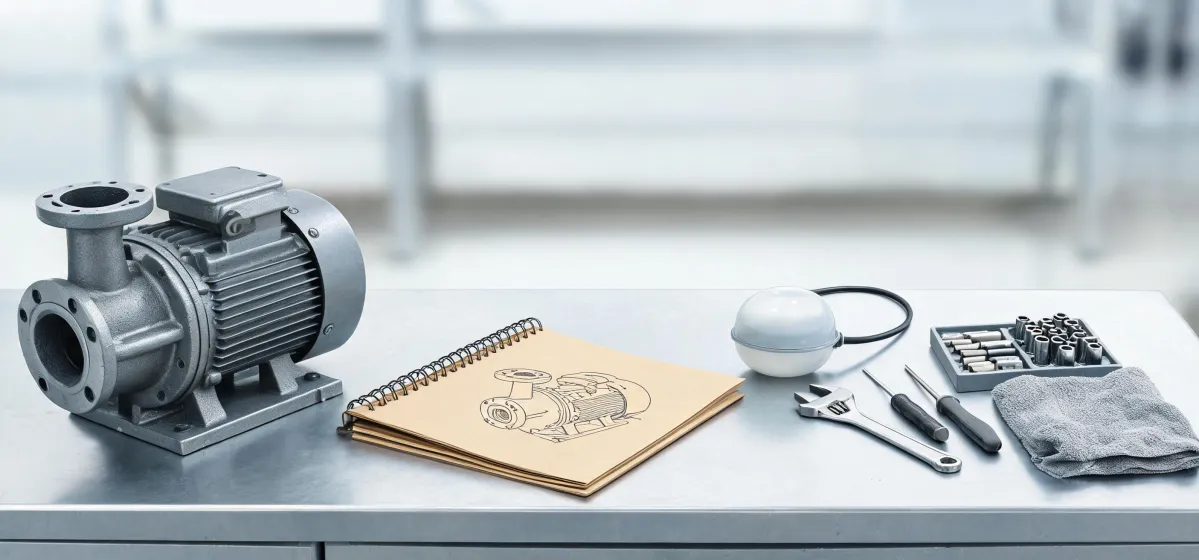
Tuesday, 2:47 PM. The phone at my desk rings. A one-man plumbing outfit from outside Dayton—Dan—is on the line. He's putting a basement bathroom into a 1960s ranch, and the main sewer line sits two feet above the floor. Gravity won't cooperate. The only play is a sewage ejector system.
He needs a Liberty 10PMD1WP sewage pump, a Liberty ALM-2 high-water alarm, and a check valve. Then he asks the question that turns a ten-minute order into a twenty-minute conversation:
"How long does a check valve last?"
There's a short answer. And then there's the answer I give after eight years of reviewing pump systems for a living.
Small Order, Same Standard
Dan's order was small. Around $400. One pump, one alarm, one valve, some fittings. Not the kind of order that moves quarterly numbers.
Here's what I've learned about small orders: they deserve the exact same quality review as the fifty-unit commercial packages we ship to municipalities. The guy ordering one pump today is the same guy quoting a twenty-unit apartment building next spring.
When I started in quality inspection, that wasn't the attitude everywhere. Some vendors let small orders slide through with less scrutiny. I've watched it happen. And I've heard the phone calls that follow—the eleven o'clock calls from a contractor staring at a flooded basement.
Those calls are why our checklist never changes based on order size.
The 10PMD1WP: A Workhorse With One Weakness
The Liberty 10PMD1WP is one of our most commonly specified residential sewage pumps. Half horsepower, cast iron volute, 2-inch NPT discharge. Built to handle a typical basement bathroom group—toilet, sink, maybe a shower—for a long, hard life. It's listed to UL 778, the safety standard for motor-operated water pumps.
But it has the same weakness every pump has: it can fail silently.
A stuck float. A tripped breaker. Debris jamming the impeller. Any of those and the pump simply doesn't run when the basin fills. In a finished basement, that's not a wet-floor nuisance. That's carpet replacement, drywall cutout, and a very unhappy homeowner.
That's where the ALM-2 earns its keep.
The Liberty ALM-2 is a high-water alarm. Wall-mounted, with a buzzer, a test button, and a tethered float switch that hangs in the sump. When water reaches the float, the alarm sounds—loud enough to hear from the upstairs bedroom. It doesn't prevent the problem. It tells you about it before the water finds the floor registers.
Dan almost skipped the alarm.
"The pump's brand new," he said. "It's not going to fail in month one."
"Probably not," I told him. "But you're not installing this for month one. You're installing it for year ten."
He ordered the alarm.
How Long Does a Check Valve Last?
Now the check valve question.
Here's the honest answer: somewhere between fourteen months and ten years. Depends on what you buy, how you install it, and what's in the water you're pumping.
I know that range sounds evasive. It's not. It's the difference between a fourteen-dollar plastic valve from an online auction and a properly specified cast-iron check valve installed the way the manufacturer drew it.
Per the International Plumbing Code, ejector discharge lines are required to have a check valve. That's code language, not a suggestion. The valve stops the water column above the pump from draining back into the basin between cycles. When it leaks, the pump short-cycles. Short-cycling means more starts, more wear, earlier failure.
Three things determine how long a valve survives:
Material. Cast iron body with a reinforced rubber flapper and stainless hardware will outlast a plastic-bodied valve in sewage service. Plastics get brittle. They warp. The sealing surfaces wear unevenly. Cast iron doesn't.
Design. A full-port valve with a smooth internal bore passes solids with less turbulence. A restrictive internal passage adds back-pressure, which makes the pump work harder than it should on every single cycle.
Installation. A valve installed vertically, properly supported, seats and seals correctly. A valve hanging crooked in the line is carrying weight it shouldn't, and it will wear irregularly.
Given all that, here's the planning number I give customers:
Expect 5 to 7 years from a quality cast-iron check valve in typical residential ejector service. Inspect it annually, starting after the first year. And replace it whenever you replace the pump—those two parts age together.
I'm not 100% sure that number holds for every installation. If you're pumping high solids content, or the pump cycles more than a dozen times a day, the seal wears faster. If it's a low-use vacation home where the pump runs twice a week, the valve might go a decade or more.
But 5 to 7 is the number I use. It's honest. More honest than "it'll last as long as the pump."
The $22,000 Lesson
I didn't always answer the check valve question this way.
In my first year doing quality review, I approved a batch of fifty pumps for a housing development. The spec called for check valves. The vendor submitted a "comparable" valve at a price that looked very good on paper. I confirmed the body material, the connection size, the pressure rating. What I didn't check was the internal design.
The valves had a heavy spring-loaded flapper. It required more opening pressure than a half-horsepower pump could consistently deliver. The pumps ran. They strained. Several failed under warranty. The contractor had to pull every fixture and re-plumb the discharge lines.
That mistake cost us $22,000 in rework, and the relationship took two years to repair.
To be fair, the vendor didn't lie. The valve met the minimum specs we'd given them. But the minimum spec didn't account for real-world conditions. When you're specifying components, "minimum" is a trap. You're not designing for the best-case pump run. You're designing for the heaviest debris load on the hottest day of the year.
That's why I put Liberty RV-2 check valves in front of customers like Dan. Not because they're the cheapest option. Because they're a known quantity—matched to the pump, tested alongside it, and backed by the same warranty and support network as everything else in the basin.
Products: Liberty Pumps ALM-2 and 10PMD1WP
Dan's order came together like this:
- Liberty Pumps 10PMD1WP sewage pump — 1/2 HP, cast iron construction, 2-inch discharge. The heart of the system. Sized for a single bathroom group or a bathroom plus a small utility sink.
- Liberty Pumps ALM-2 high-water alarm — tethered float, audible buzzer, test switch. Mount it somewhere someone will actually hear it—then test it once a quarter.
- Liberty RV-2 check valve — 2-inch cast iron body, reinforced rubber flapper, stainless steel hardware. The part that keeps the discharge line from working backward.
Dan also had a couple of tool questions while I had him on the phone. He was in the market for an XR series hammer drill kit for the tile and concrete work that fills the gaps between pump installs—the DCD1007WW1, specifically. Solid choice: brushless motor, sensible clutch range, and a kit that ships with two batteries. For a one-man operation that can't stop halfway through a job to charge a single pack, that matters.
And his shop air compressor had started short-cycling. I gave him the quick air compressor tech support rundown: check the pressure switch, inspect the unloader valve, and listen for air leaking past the tank's check valve once the compressor reaches cut-out pressure. The little things are usually the culprit.
Side conversations like that are half the job. Contractors don't call only about pumps. They call about whatever's on the truck that week.
What I'd Tell a Contractor Asking Today
If you're installing a sewage ejector system and wondering how long a check valve will hold up, here's the practical version:
- Buy a check valve rated for solids-bearing sewage, in the same size as the pump discharge. Cast iron body. Skip the plastic.
- Install it correctly. Flow arrow pointing toward the discharge line. Level and supported. That's non-negotiable.
- Inspect it once a year. Look at the flapper, the hinge, and the sealing surfaces. Check the joints for seepage.
- Replace it when you replace the pump. They wear together, and replacing only one is how you get a callback.
- Install a high-water alarm. The ALM-2 or an equivalent, then test it quarterly with the pump float.
Pump, valve, alarm. That's the package. Not a list of optional extras.
Small Orders, Same Bar
Dan's system shipped two days later, through the same checklist as the fifty-unit development order. Same factory testing. Same standard.
My experience comes from reviewing a few hundred pump orders a year, most of them residential and light commercial. If you're working on industrial or municipal systems with grinder pumps and larger discharge lines, the check valve math is different—heavier valves, tighter inspection schedules, and usually an engineer's review on the whole pump station. I can't speak to those applications with the same certainty.
But for the basement bathroom, the rental unit, the one-man shop doing right by a homeowner—this answer holds.
Dan sent me a photo of the finished installation about three weeks later. Pump. Valve. Alarm. Clean piping, properly supported. I don't know if that basement will ever flood. But I know Dan will hear about it before it does.
That photo is still on my phone. Not because of the pipe work. Because it's a reminder that small orders and big standards aren't opposites.
They're the same thing.

Maren Jorgensen
Maren Jorgensen is an independent hand tool and torque applications analyst covering wrenches, pliers, screwdrivers, hammers, sockets, ratchets, hex keys, and tool sets. She applies ISO 6789-1 torque-tool conformance principles while examining jaw capacity, leverage, fastener engagement, torque range, accuracy, handle geometry, and material hardness. Her practical guides help tradespeople and procurement teams select suitable tools, plan controlled tightening, and compare durability without relying on brand reputation alone.