LE51A vs P372LE51: A Buyer's Take on Liberty Pumps
I've been handling purchasing for a 400-person facilities company for about five years. In a normal year I process maybe 60–80 orders across electrical, plumbing, and HVAC vendors. Not exactly glamorous work, but when you order the wrong part, you hear about it. Especially if the part is a sewage pump.
Last spring we had to replace two sewage lift pumps. One was a straight swap in an existing basin. The other was part of a small remodel—new basin and all. This is where I expected a standard product comparison: Liberty Pumps LE51A vs P372LE51. What I didn't expect was that the comparison would turn into a reminder about check valves, serial numbers, and how the maintenance crew decides whether to cut something with a grinder. All of it matters. But not in the way you'd think.
LE51A vs P372LE51: same pump, different purchase
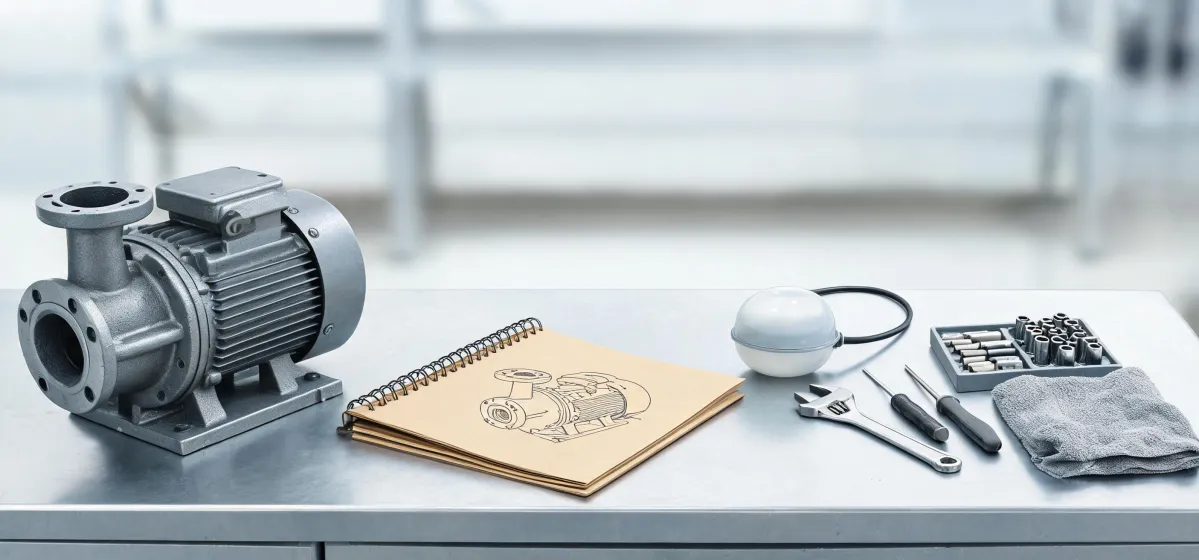
The LE51A is basically the workhorse 1/2 hp sewage pump from Liberty Pumps. It's a cast iron automatic pump with a vertical float switch. People use it for effluent pumping, sewage ejector systems, and sump pits. It's the kind of pump you can drop into an existing basin, wire it up, run the discharge line, and forget about.
The P372LE51 is a prepackaged system—it includes the LE51A pump plus a basin, lid, and the necessary piping. It's designed for new installations where you don't want to source the basin separately.
The buying decision looked simple on paper. What I learned is that it's actually a comparison between two different ways of running a project:
- If we have an existing, structurally sound basin, the LE51A alone is the lower-cost, less invasive option. One pump, one float, one discharge line.
- If we're digging a new pit, the P372LE51 installs faster because the components are already matched. We don't have to trust that “a similar basin” will fit the pump.
I kept thinking we were comparing pumps, but really we were comparing installation modes. That distinction changed our quantity estimate too. We bought one LE51A for the swap and one P372LE51 for the remodel.
(Side note: I still kick myself for assuming the existing basin at one site was “basically the same” as the one Liberty uses in the P372LE51. The depth wasn't. If we'd ordered the prepackaged option first, the float would've been too high and the pump would've short-cycled.)
Pump versus check valve: the quiet failure point
Here's a comparison that doesn't get enough attention: the pump versus the check valve. Ask any installer and they'll tell you the pump is the heart of a sewage system. But the check valve is the part that actually stops backflow when the pump shuts off. If it fails, you get sewage draining back into the basin and the pump cycling like it's doing interval training.
Our team used to keep a couple of generic check valves on the truck “just in case.” Turns out that approach has a cost. On one job, the generic valve had a smaller internal bore than the pump discharge line. The line wasn't the problem—the restriction was. We started seeing repeated pump alarms until one of the technicians pulled the valve apart and found waste buildup slowing down the flap.
Now I look at the check valve catalog before I order anything. I match valve body size, connection type, and flow direction. It's an extra twenty minutes of my life, but it beats a callback.
The comparison conclusion for this section: a pump is the thing you spec. A check valve is the thing you verify. One gets all the marketing attention, the other gets all the abuse.
Serial numbers: the welder serial number lookup lesson
One of our technicians had a different problem last winter. He needed to order a replacement part for a welding machine—a contactor, I think. The machine was older, and the first parts supplier asked for the serial number. The technician had to crawl behind a workbench, photograph the data plate, and carefully read the digits. The part he ordered initially was wrong, not because the model name matched, but because the serial number revealed a manufacturing revision he didn't know about.
When I asked him later if he had the pump data, he said, “We just needed an LE51A.” But Liberty Pumps has made multiple versions of that model line, and the replacement float or impeller kit can differ by revision or voltage. That's exactly when I started doing a welder serial number lookup-style verification for pumps: check the label, check the voltage, and if possible check the serial number.
The contrast: ordering by model name feels fast. Ordering by serial number feels slow. But the first approach is slow in a different way—the way that involves returning a wrong part and waiting another week for the right one.
“Can you cut with a grinding wheel?” The quick-fix versus the right-fix
Somewhere in the middle of the project, one of the field guys asked me: can you cut with a grinding wheel? I knew the practical answer, but I also knew the real question wasn't “is it physically possible.” It was “should we cut the old pipe and bolts instead of doing a proper removal?”
Yes, you can cut with a grinding wheel. You can cut steel, cast iron, and even concrete in some cases. But cutting near a sewage pump basin creates sparks, debris, and the kind of access problems the maintenance crew doesn't need. If you slip and score the discharge pipe or the pump housing, you've traded a stuck bolt for a leak.
The comparison here is quick-fix versus right-fix. A grinder is a rapid solution when you have clearance and a clear view of what's behind the wheel. It's dangerous when you're working blind in a wet basin.
We told the crew to use a grinder for cutting away a rusted bracket above the basin—not for separating the pump from the discharge pipe. That's what unions and a little penetrating oil are for.
“The vendor who says 'this isn't our strength—here's who does it better' earns my trust for everything else.” — A lesson that applies to both vendors and internal teams.
That quote is how I ended up thinking about the whole project. Knowing when we need a prepackaged system versus a bare pump, knowing which check valve fits, and knowing when to NOT cut with a grinder—all of these are boundaries. Professionalism is having boundaries.
What I'd tell another buyer
If you're choosing between the liberty pumps le51a and the liberty pumps p372le51:
- Pick the LE51A when you're replacing an existing pump in a basin that's in good shape.
- Pick the P372LE51 when you're installing from scratch or doing major basin work.
- Spend five minutes in the check valve catalog before finalizing your order.
- Use the same serial-number verification discipline you'd use for a welder. It's annoying, but it prevents the most expensive week of your project from happening.
And when someone asks whether you can cut with a grinding wheel? The answer is yes—but the better question is whether it's the right tool for this specific moment. Most of the time, the answer is “no, take it apart properly.”
That's the real comparison I didn't expect to make. It's not just pump A versus pump B. It's the difference between buying a part and supporting a system.

Maren Jorgensen
Maren Jorgensen is an independent hand tool and torque applications analyst covering wrenches, pliers, screwdrivers, hammers, sockets, ratchets, hex keys, and tool sets. She applies ISO 6789-1 torque-tool conformance principles while examining jaw capacity, leverage, fastener engagement, torque range, accuracy, handle geometry, and material hardness. Her practical guides help tradespeople and procurement teams select suitable tools, plan controlled tightening, and compare durability without relying on brand reputation alone.