Liberty Pumps PRO380 Series Simplex Sewage System: 7 Questions Buyers Actually Ask
-
1. What exactly comes with the PRO380 Series simplex sewage system?
-
2. Is the PRO380 a better value than buying components separately?
-
3. When should you NOT choose the PRO380 Series?
-
4. What's the most common installation issue?
-
5. How does warranty support actually work in practice?
-
6. What about Liberty Pumps in Canada?
-
7. What accessories should I order at the same time?
If you're responsible for ordering sewage pumps—whether for a property management company, a small municipality, or a construction supply operation—you've probably come across the Liberty Pumps PRO380 series simplex sewage system. I've been ordering these for about five years now, and these are the seven questions that come up most often, along with what I've learned from purchase orders, installer feedback, and a warranty claim or two.
1. What exactly comes with the PRO380 Series simplex sewage system?
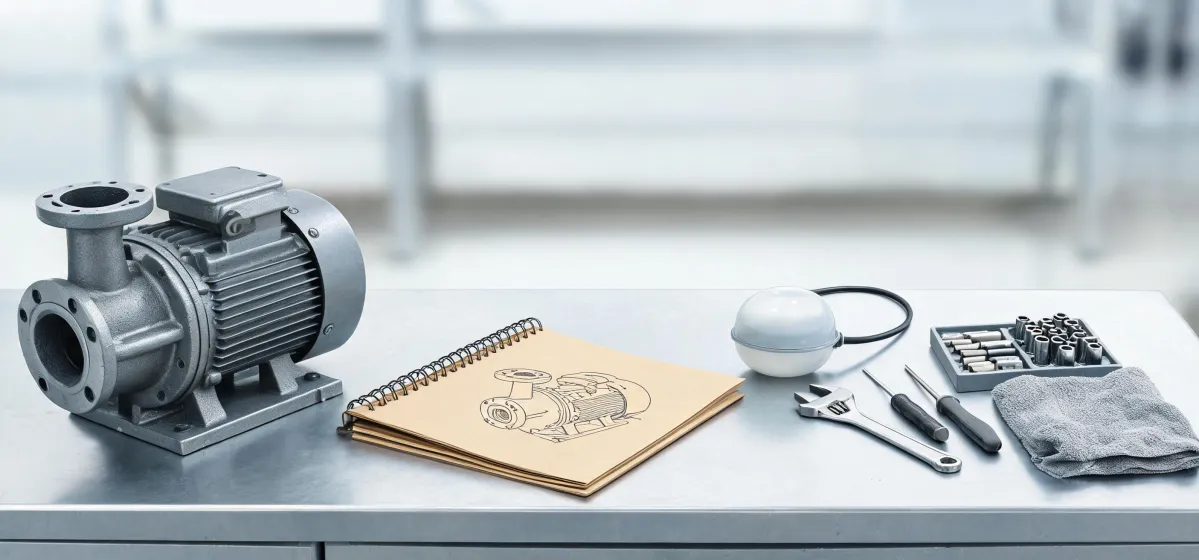
The package includes the pump itself—a 1/2 HP sewage ejector—plus the basin, and a pre-assembled lid with the float switch already mounted. That pre-assembled lid is the big deal. It means the pump, basin, and switching mechanism are matched from the factory, so you're not hoping that a pump from one product line and a switch from another will play nicely together.
What's not included: the discharge piping, the check valve, and any electrical hookup beyond the pump cord. Your installer supplies those. I've seen a first-time buyer assume "system" means "everything in one box," and then the job stalls while someone runs to the supply house for fittings. We didn't have a formal checklist for this on our first order, and it cost us a half-day of labor when the installation stopped partway through.
2. Is the PRO380 a better value than buying components separately?
For simplex applications, yes—at least, that's been my experience across the dozens of units we've ordered over the years. We priced out a component-based alternative once: pump, basin, lid, and float switch from different manufacturers. It came in maybe 10–15% below the complete PRO380 system. But the factory-matched lid saves about two hours of installation time, and when you're paying a licensed plumber by the hour, that labor savings wipes out the price difference entirely.
One caveat: prices have crept up. In 2024, I was budgeting around $950 per unit from our regular distributor. By late 2025, the same quote was closer to $1,200. Maybe $1,150—I'd have to check the latest invoice. I don't have hard data on market-wide trends, but my sense is that we're seeing this across pumping equipment generally, not just Liberty Pumps.
3. When should you NOT choose the PRO380 Series?
I'll be straightforward with you: this is not the right system for every job. There's no single "best" sewage pump—just the right fit for the situation. The PRO380 is ideal for a single-family home, a small commercial building with one restroom, or a light-duty sewage application. If you're in any of these situations, keep looking:
- High-traffic commercial buildings where a pump failure can shut the business down. You want redundancy, which means a duplex system.
- Applications that need a backup pump. That's what Liberty's simplex/duplex systems with alarms are for. The PRO380 is a single-pump setup.
- Waste streams with heavy solids or wipes. Wait—I should be clear. The PRO380 is a sewage ejector, not a grinder pump. If you're handling non-flushable items, Liberty's grinder pump line is the better call.
The honest approach: the PRO380 handles about 80% of what we encounter. The other 20% needs a different tool. Saying that up front saves an uncomfortable phone call later.
4. What's the most common installation issue?
What most people don't realize is that the pump itself is rarely the problem. The most common complaint we get is slow drainage or the pump short-cycling—and in nearly every case, it's a venting issue or a discharge line layout problem. The PRO380's basin has specific inlet hub requirements, and if the plumber doesn't vent it correctly, you'll hear gurgling, and the float will keep the pump running longer than it should. We had a tenant complaint about noise once and almost swapped the entire system out—turned out the vent was undersized. Not Liberty's fault.
That said, we did have one unit where the float switch came out of calibration. The pump ran for 15 seconds, shut off, then repeated. Our plumber was ready to pull the whole system. I called Liberty's tech support—about ten minutes on hold—and they walked him through recalibrating it on site. A bit annoying, but handled. Which, honestly, is more than I can say for some other brands we've dealt with.
5. How does warranty support actually work in practice?
The PRO380 carries Liberty's standard two-year warranty, though verify that with your distributor, because I don't want to quote it wrong. Here's how a real claim went for us: we had a seal failure on a unit at about 18 months. I called Liberty, gave them the serial number and proof of purchase, and they issued an RMA and shipped a replacement pump. We covered the labor to swap it out, but the pump itself was covered. From phone call to receiving the replacement: about a week.
My advice: keep your paperwork. We almost lost that claim because the invoice was buried in an old email thread with a contractor we no longer work with. I said "we need every invoice filed going forward." They heard "organize the filing." Result: the next claim took twice as long to process. (Note to self: actually keep the folder current this time.)
6. What about Liberty Pumps in Canada?
This comes up often with our Canadian clients. The short answer: Liberty Pumps products are available in Canada, but not directly from the factory. They're sold through select plumbing supply houses, and lead times typically run two to four weeks, compared to a few days for US orders. If you're specifying a PRO380 for a Canadian project, build that lead time into your schedule.
Two more things to verify before ordering:
- Voltage: the PRO380 is available in both 115V and 230V. Make sure you spec the right one. This mistake happened to us on a job in Ontario, and it wasn't cheap to fix.
- Certification: CSA certification is generally recognized across Canada, but local authorities having jurisdiction get the final say. Verify before you commit.
Honestly, I've never fully understood why Canadian distribution runs pricier and slower—my best guess is additional distribution layers. But it's manageable once you know what to expect.
7. What accessories should I order at the same time?
Don't order the bare unit. These three add-ons are worth putting on the same purchase order:
- Liberty's matching check valve. We tried a generic valve once and noticed increased noise and hammering. Not a scientific study, I admit, but we've stuck with Liberty's valve since.
- A high water alarm kit. Some jurisdictions require it. Even where they don't, it's cheap insurance against a silent failure.
- One spare float switch for every four systems. Float switches are the most common wear point we see. Having one on the shelf has saved us an emergency supply-house run more than once.
One more thing: ask your distributor for the manufacturer's cut sheet and the warranty policy PDF at the time of order. A distributor who can't produce those is the same distributor who'll let you down later. I learned that the expensive way.

Maren Jorgensen
Maren Jorgensen is an independent hand tool and torque applications analyst covering wrenches, pliers, screwdrivers, hammers, sockets, ratchets, hex keys, and tool sets. She applies ISO 6789-1 torque-tool conformance principles while examining jaw capacity, leverage, fastener engagement, torque range, accuracy, handle geometry, and material hardness. Her practical guides help tradespeople and procurement teams select suitable tools, plan controlled tightening, and compare durability without relying on brand reputation alone.