Quality Isn't a Feature. It's the Brand: What I Check Before a Pump Ships
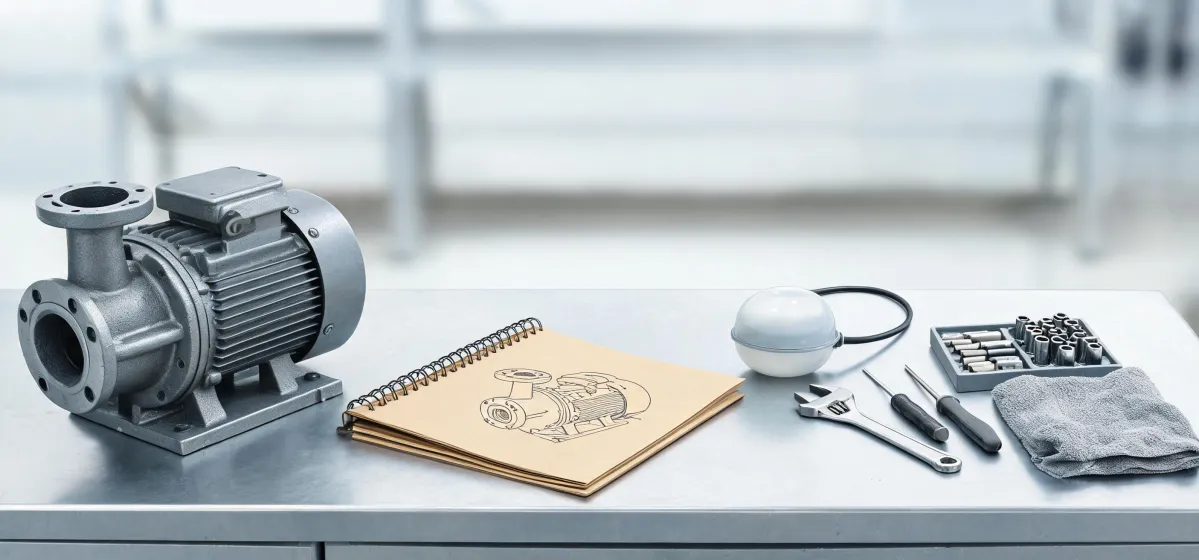
I review pump deliveries for a living. Not once in a while, and not just when something looks wrong. Every unit that passes through our warehouse gets checked before it leaves—roughly 500 to 600 pumps a year. I've rejected about 4% of first deliveries in 2025. Rarely because the pump arrived dead. Usually because the spec didn't match the paperwork, the paperwork didn't match the field condition, or the small parts in the box weren't going to survive an actual job site.
That history has made me opinionated. Here's what I believe, stated directly: quality is not a feature of the pump. Quality is the first impression your customer gets of your company.
Pumps are tested in factories under ideal conditions. Job sites are not ideal. A pump can run perfectly on a test bench and still make a contractor look careless in the real world. If the discharge hose slips off during the first wash cycle, or the installer is standing in a laundry room reading the manual by phone light, the customer doesn't think that's a pump issue. They think this company doesn't have its act together. That thought is the brand.
The spec sheet is a promise, not a suggestion
Will the Liberty Pumps 1/3 hp 115v residential drain pump handle this washing machine drain? This is one of the most common questions on our order line. Yes, usually. It's the pump we quote most often for laundry discharge and light utility drainage. But usually is not a spec.
Some of those callers then go home and search for 1/3 hp sump pump specs. They want to compare flow numbers and horsepower. Fair enough. But the figures that actually prevent callbacks are the minimum basin size, the discharge pipe size, the float clearance, and the circuit rating. They are on the same specification sheet.
Last year I rejected a delivery because the motor labels didn't match the documented specs. The vendor said it was a minor difference. I called it a return. On a 15-amp circuit with a washing machine starting up, a minor electrical difference can trip the breaker at the worst possible moment. The spec sheet isn't a formality. It is a promise from the manufacturer to the installer, and from the installer to the client. When the product does not match the paper, somebody's brand absorbs the cost.
A manual saves more than a phone call
Our search logs still see the phrase 300 series washer manual on a regular basis. It's usually from a homeowner or an apprentice who bought a compact drain pump for a washing machine standpipe, then lost the booklet before installation. Or downloaded the wrong manual because they were in a hurry.
I get the temptation. A washing machine drains quickly, but a pump is a pump, right? Not quite. The manual for that small drain pump includes the installation details that keep water where it belongs: the minimum inlet height, the float clearance, the venting requirement, and the correct discharge connection. Skip those details in a laundry closet, and a small mistake becomes a wet floor.
Before I approve a replacement pump, I also check the manual against the order. If the order says one voltage and the manual says another, I won't sign it. That kind of verification sounds basic. It's exactly the step that disappears when an install is running late.
And when the documentation isn't enough, we call. Liberty Pumps customer service has helped us sort out replacement applications more than once. A ten-minute phone call before the job beats a return trip after it.
What hose clamp sizes are most common?
If I had a dollar for every inspection note that mentions a hose clamp, I could retire early. The clamp is small, cheap, and easy to dismiss. It is also the only thing between the pump discharge and the rest of the house.
Our technical line really does get the question: what hose clamp sizes are most common? For small residential drain pump work, I most often specify 3/4-inch and 1-inch worm-gear clamps. But a chart is not a substitute for measuring. The clamp has to fit the actual outer diameter of the hose and seat fully on the barb. Too large, and it spins or slips. Too small, and it never seats. Just snug, and pump vibration will work it loose over time.
In 2025, the most avoidable water-damage job I reviewed started with a clamp that was close enough. The pump was not the problem. The connection was. The homeowner still remembers that leak, and they remember the installer who left it. They don't remember the pump model.
Doing it right isn't the same as spending more
If you're expecting me to say every installation needs the most expensive equipment available, don't hold your breath. I sign off on budget-conscious configurations whenever they fit the application. A plain 1/3 hp 115-volt sump pump working with the right basin, the right float clearance, and a properly secured discharge line will outlast a premium pump installed carelessly.
None of what I'm describing costs extra. Reading a spec sheet is free. Opening a manual is free. Choosing the right hose clamp costs about the same as choosing the wrong one. These are attention investments, not premium upgrades.
What I push back on is the attitude that quality begins when the pump gets expensive. It doesn't. Quality begins when someone decides to follow the details that are already on the page. Code is the floor. Quality is a choice.
Quality is perception, and perception is built on the first install. A pump that was specified correctly, installed by someone who read the manual, and connected with a properly sized hose clamp looks boring. Boring is good. Boring is dry laundry rooms, quiet basements, and no middle-of-the-night calls.
That's what I'm trying to protect when I check a box before it ships. The pump itself is only the beginning. The details decide whether the customer trusts you—and the brand you chose.

Maren Jorgensen
Maren Jorgensen is an independent hand tool and torque applications analyst covering wrenches, pliers, screwdrivers, hammers, sockets, ratchets, hex keys, and tool sets. She applies ISO 6789-1 torque-tool conformance principles while examining jaw capacity, leverage, fastener engagement, torque range, accuracy, handle geometry, and material hardness. Her practical guides help tradespeople and procurement teams select suitable tools, plan controlled tightening, and compare durability without relying on brand reputation alone.