Sump Pump Installation: Cheap Quotes Hide a Bigger Problem
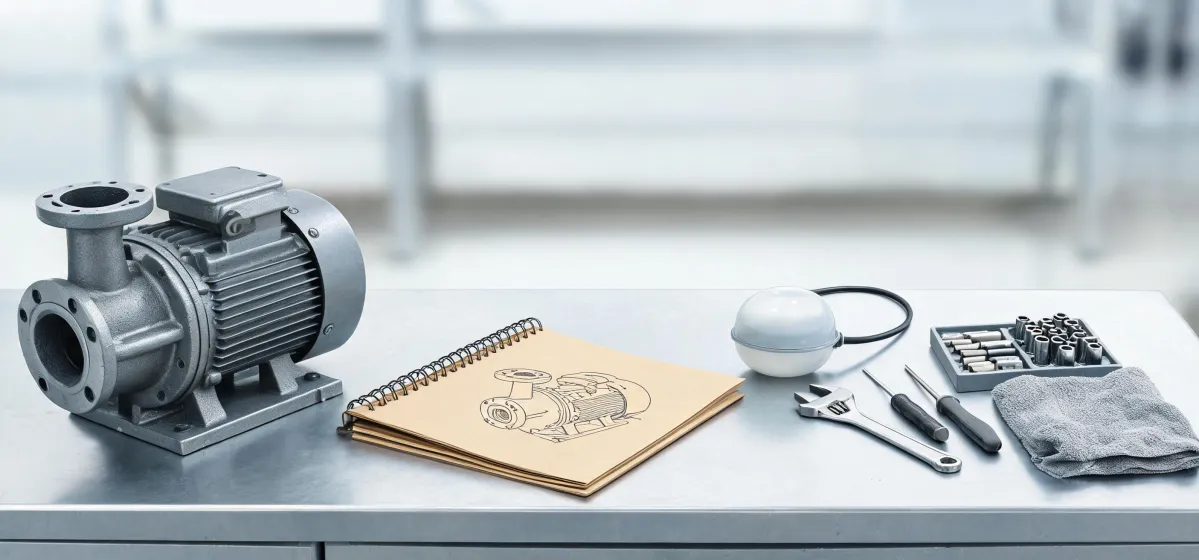
You wouldn't look up how to choose a grinding wheel and then buy the first abrasive disc that appears in the search results. Wrong grit, wrong material, and wrong disc construction all cause problems. Choosing a sump pump with only a model number in mind is the same mistake. The install doesn't fail because the pump is bad. It fails because the system around the pump wasn't quoted or planned.
I manage purchasing for a 14-person plumbing and mechanical company. For the past six years I've tracked pump orders, returns, accessories, and the labor hours they create in our cost system. Our annual pump-related parts budget is about $170,000. That sounds small compared with national contractors, but it's enough to show a clear lesson: the money we lose on sump pump installation is rarely the pump. It's everything we didn't think of before install day.
The surface problem: buyers ask which pump before asking how the system fits
The phrase sump pump installation makes people think of a pump being dropped into a pit. The mental picture is wrong. A real installation is a small piping and control system.
In purchase requests, I see the same pattern again and again. Someone wants a specific pump. They've read a Liberty Pumps 287 review and decided that's the model. Or they've seen a Liberty Pumps 406 spec sheet and assume the pump alone is enough. But the pump is one line item on a long parts list.
That list usually includes the basin, lid, gasket, float switch, discharge pipe, fittings, union, check valve, and electrical connections. In some cases it also includes a battery backup or alarm. Skip any of those in the quote and you haven't saved money. You've created a second invoice.
The deeper problem: comparing unit prices instead of installed cost
The real question isn't whether Liberty Pumps makes a good pump. The real question is whether the quote covers a working system. That's where product-only thinking falls apart.
For example, a check valve on the discharge line is not optional in most sump applications. Without one, the water in the vertical pipe falls back into the pit every time the pump stops. The pump cycles more often, the float wears, and the motor works harder than it should. A good check valve is not expensive, but it has to be the right size and type for the pipe.
Liberty Pumps makes the 30-0046 1-1/2" PVC union check valve for exactly that job. The union body matters. It lets a servicer open the valve for cleaning or replacement without cutting the pipe. That sounds like a small detail until you're the one on a wet basement floor with a hacksaw. I know because our crew has been there.
The mistake is comparing the price of a pump without comparing the price of the whole installation. A pump that costs $55 more may include a better switch, a more serviceable cord, or a design that gives the float more room to travel. Those features don't show up on a comparison chart, but they show up in callbacks.
What skipping the system details actually costs
Eighteen percent of our pump-related service overruns in 2023 came back to missing or mismatched accessories. Not failed pumps. Missing check valves, wrong pipe adapters, floats that didn't fit the basin, and pumps that were too tall for the cover.
Here's one example. A customer supplied a pump they'd bought online. The quote was lower because it skipped the check valve and the union. On paper, the customer saved $48. In reality, the install crew had to modify the discharge line, order the 30-0046 1-1/2" PVC union check valve from our stock, and come back the next day to finish. That $48 saving turned into a $230 change order and a frustrated homeowner.
Another example was a pump selected by horsepower alone. The motor was strong enough, but the assembly didn't fit the narrow basin already in the floor. The float switch hung up on the basin wall. That pump short-cycled until the motor thermal protector shut it down. We replaced it with a slimmer Liberty Pumps unit, added a tether float that could move freely, and had to patch the old basin opening. The final cost was almost twice the original quote.
There's a pattern here, and it's not bad luck. It's the gap between a catalog price and a total cost of ownership. I built a cost calculator for our own team after getting burned on hidden fees twice. Since then, every quote includes the same checklist. If something isn't needed, we list it as not needed. If something is needed, it goes in the quote.
The cost nobody sees until later
The most dangerous cost in a sump pump installation is the one that shows up during the next heavy rain.
If the pump is installed but the discharge piping is too small, the pump works harder than its design allows. If the check valve is weak or built for a different pipe material, it can leak and cause the pump to cycle all night. If the electrical connection isn't protected from moisture, the pump can lose power at the worst time.
None of those failures are caused by the pump brand. They're caused by treating each part as an independent product instead of part of a system. That's why I get frustrated when search queries focus only on a model name. A Liberty Pumps 287 review can tell you about the motor and switch, but it can't tell you whether that pump fits your basin or whether your discharge line needs a union check valve.
The same applies to a Liberty Pumps 406. The model number tells a knowledgeable contractor which pump family you're considering. It doesn't tell them about the height of the pit, the length of the horizontal run, or whether the previous installer glued a check valve directly into the waste pipe. Those site details matter more than the motor size.
Published performance data has its place. Most manufacturers in this space follow Hydraulic Institute test methods when they publish pump curves. But a test curve is not an installation plan. It's a starting point for matching the pump to the required flow and head, not a substitute for thinking through the piping.
A simpler way to think about it
Searching for a sump pump without checking the whole installation is like asking how to choose a grinding wheel and then ignoring the metal you're grinding. Wheel hardness and grit have to match the job. If they don't, the wheel loads up, glazes, or wears out early. The same logic applies to pumps, check valves, floats, and basins.
Here's what our procurement checklist looks like now:
- Define the job. Is this a groundwater sump pit or a sewage ejector pit? The pump classes are different.
- Measure the envelope. Basin diameter, basin depth, discharge pipe size, and distance to the exit point.
- Choose a pump family that covers that envelope. Compare published performance curves, not just horsepower.
- Add the control and protection layer. Float switch, check valve, alarm, and backup power if the application needs them.
- Price the complete install. Parts, pipe, fittings, labor, electrical, and code inspection.
For 1-1/2" PVC discharge pipe, the Liberty Pumps 30-0046 is a standard line item in our shop. The union design makes service easier later. For pumps, I make sure the selected model allows enough clearance for the float and is sized for the actual flow. If someone asks about the Liberty Pumps 287, I read the review too, but then I ask what the installation sheet says about minimum basin size. If someone prefers the Liberty Pumps 406, I do the same thing.
The models are never the whole story. What matters is whether the person quoting the installation has thought about the entire system. After six years of tracking every invoice and service call, I'll take a slightly more expensive quote with all the right parts over a cheap-looking bid that leaves out a check valve. The cheap bid is usually the one I end up fixing later.
Take it from someone who has paid for that mistake more than once: no pump is a standalone product. A good sump pump installation is a system, and the system starts with asking better questions before you buy the pump.

Maren Jorgensen
Maren Jorgensen is an independent hand tool and torque applications analyst covering wrenches, pliers, screwdrivers, hammers, sockets, ratchets, hex keys, and tool sets. She applies ISO 6789-1 torque-tool conformance principles while examining jaw capacity, leverage, fastener engagement, torque range, accuracy, handle geometry, and material hardness. Her practical guides help tradespeople and procurement teams select suitable tools, plan controlled tightening, and compare durability without relying on brand reputation alone.