Why I Spec a Liberty Pumps Sewage Ejector System Even When the Price Isn't Lowest
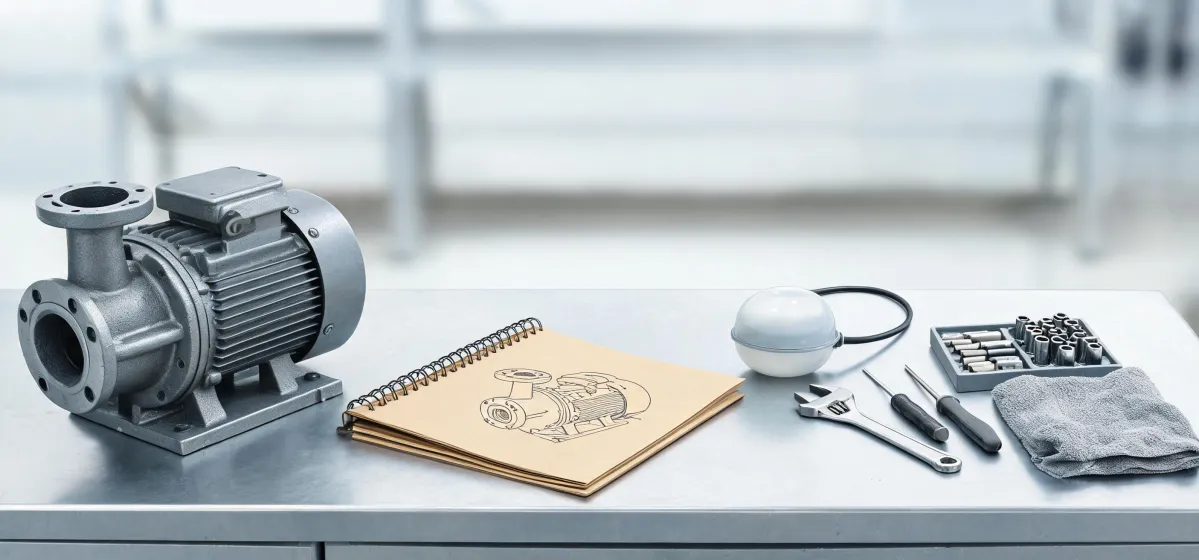
I manage procurement for a 40-person mechanical contractor. For the past six years, I've tracked roughly $1.2 million in annual material spending, and I've built a spreadsheet that records every pump order, callback, and replacement. Honestly, that spreadsheet made me annoying to sell to, and it's also the reason I want to make an argument you don't hear from pump manufacturers: the total cost of a Liberty Pumps sewage ejector system is lower than the sticker price of a cheaper setup.
Price is what you pay on the invoice. Cost is what you pay when the alarm goes off at 2 a.m. and somebody has to drive out to deal with it.
I didn't start with that opinion. I started with the classic rookie mistake: I picked a pump package based on the lowest item price and ignored everything else. The pump arrived, the discharge orientation was different, and the install crew spent two hours adapting the piping. The fittings and labor wiped out the savings. Then the float switch hung up, and we got a callback. That experience is why I'll keep specifying Liberty Pumps sewage ejector systems even when the budget person asks why we can't use the cheaper option.
Let me be clear: I don't get a commission from Liberty Pumps. I keep liberty-pumps.com in my bookmarks because it's where I can download the Liberty Pumps ALM-2 alarm system manual and the current installation sheets. That might sound like a small thing, but it matters when you're trying to verify a spec at 6 p.m. before the parts order cutoff.
The total-cost argument for a complete system
A pump is not a system. A system includes the basin, the float switch, the control panel, the alarm, the check valve, and the little details that make installation predictable. When I compare quotes, I use a total-cost checklist. The purchase price is one line. The big lines are labor to install, compatibility with the basin, wiring that matches the panel, and the cost of a callback if the float switch or alarm fails.
In 2023, we compared a low-priced package against a Liberty Pumps sewage ejector system with the matching ALM-2 alarm. The low package was $350 less on paper. The install crew needed $240 of extra fittings because the discharge connection didn't line up with the existing piping. Two hours of labor went on top of that. Then the float bracket didn't fit the basin, and we spent another hour making it work. That "savings" disappeared before the system was even turned on.
The manual is part of the product
One specific reason I prefer complete Liberty Pumps systems is that the documentation matches the hardware. The Liberty Pumps ALM-2 alarm system manual is a genuine troubleshooting resource, not a folded piece of paper with illegible drawings. It tells you how to connect the high-water float, what the alarm test sequence should be, and how to interpret the light/horn pattern.
That manual saved us once. An installer used a generic wiring diagram from another panel brand and accidentally connected the alarm contacts wrong. The pump ran, the panel showed power, but the horn was silent on high water. Nobody noticed until the test cycle. We didn't have a formal alarm test procedure before that job. The ALM-2 alarm system manual has a test sequence that catches exactly that. Now a printed copy goes into every job folder, and the issue has not come back.
The hidden line items that eat budgets
When I audit our cost tracking, the expensive problems are rarely the pump itself. They're the small items and the process gaps around it.
- Site prep isn't free. A crew that shows up without checking their tools will find a way to spend an hour of labor. Last year, the hammer drill battery died halfway through coring a hole for the discharge pipe. It's a small line item, but it's still a line item.
- Lifting hardware is not a place to save. Use a galvanized eye bolt for the lifting point; that's an eye bolt galvanized after fabrication, not just a plated hardware-store part. In a damp basin, plain steel rusts and becomes a safety issue.
- Valve operation needs to be obvious. "How to turn off gate valve" sounds like a beginner question, but it's exactly the question nobody wants to answer when water is backing up. The answer is basically clockwise until the valve seats. If the handle is missing, use a wrench on the stem. Write it on the panel cover.
I mention these because they're the classic "under budget by $300, over budget by $900" margin killers. The pump itself may be perfectly fine. The installation is where the money leaks.
I should add that our numbers come from our own cost tracking system, not from a manufacturer's white paper. I can't prove your next job will behave the same way. I can only tell you what the spreadsheet says.
What about the budget line?
Every procurement conversation eventually comes back to the same question: "Can we get a better price?" My answer is usually no, not without giving something back. If your budget says $3,200 for a packaged ejector system and the total Liberty Pumps package is $3,600, the gap is $400. In my experience, that $400 is almost exactly the cost of one average callback. I'd argue you're not saving $400. You're just pre-paying for it in labor hours instead of in the invoice.
There are exceptions. If you have in-house staff who can adapt discharge fittings, rewire a panel, and troubleshoot without sending a second crew, a cheaper system might work fine. At least, that's been my experience with a few projects where the site conditions were simple and the crew had done the same install ten times. But the exception isn't the rule.
On one rush project, I had 24 hours to place the order because the slab pour was already scheduled. Normally I'd get three quotes and compare line by line, but there was no time. I went with the full package based on the manual and the matching panel. In hindsight, that was the right call—and my spreadsheet shows no callback on that one.
The cheapest system is the one you don't have to go back to fix.
That's why I keep choosing Liberty Pumps sewage ejector systems and why a copy of the Liberty Pumps ALM-2 alarm system manual is in every site folder. Looking back, I should have understood this years earlier. At the time, the price looked like the only number that mattered. The price often isn't the lowest on the comparison sheet. But the total cost usually is.

Maren Jorgensen
Maren Jorgensen is an independent hand tool and torque applications analyst covering wrenches, pliers, screwdrivers, hammers, sockets, ratchets, hex keys, and tool sets. She applies ISO 6789-1 torque-tool conformance principles while examining jaw capacity, leverage, fastener engagement, torque range, accuracy, handle geometry, and material hardness. Her practical guides help tradespeople and procurement teams select suitable tools, plan controlled tightening, and compare durability without relying on brand reputation alone.