Why We Spec the Liberty Pumps P382LE51 Simplex Sewage System — and the ALM-2 Alarm Isn't Optional
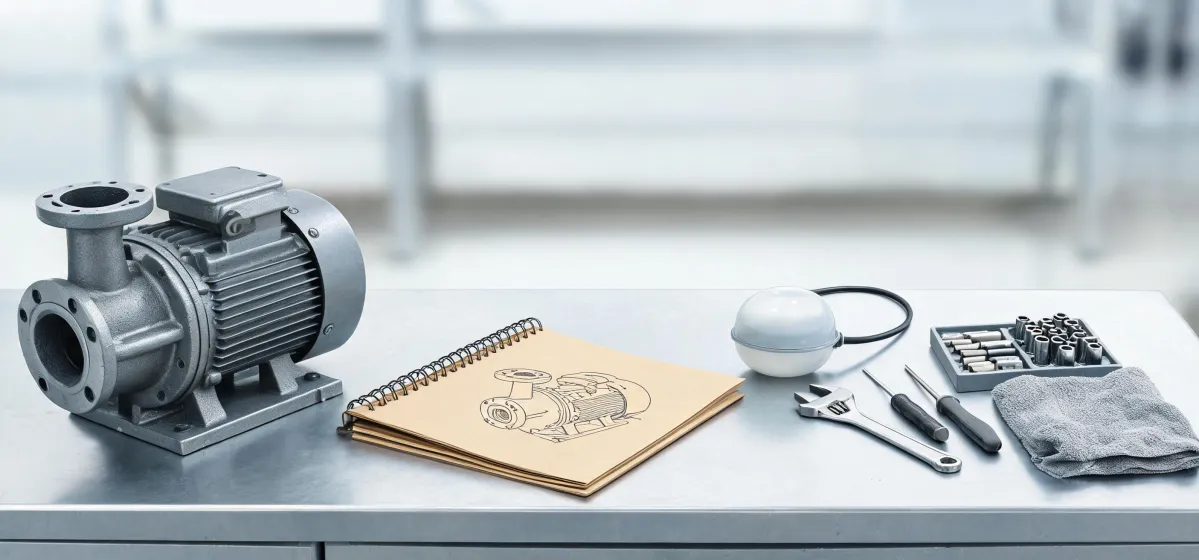
The Liberty Pumps P382LE51 simplex sewage system is my default spec for standard sewage ejector replacements across the multifamily properties our company manages. I put a Liberty Pumps ALM-2 alarm on every one of them. It is not the cheapest package we can buy—our installed cost runs about $500 per site higher than the budget options we used before—but it is the cheapest package to own. Six years of purchase records, service invoices, and one very expensive flood convinced me of that.
What I got wrong about cheap sewage pumps
When I first started buying sewage pumps, I treated them like commodities. Cast iron body, float switch, enough horsepower to push waste to the main line—what else matters? The cheaper units we chose in 2021 saved enough on paper that I felt smart about it.
Then in March 2022, one of those budget pumps failed in a below-grade laundry room. The float stuck in the off position, the pump never started, and no alarm existed to tell anyone something was wrong. By Monday morning there was about three inches of water across the floor. The repair invoice—drywall, flooring, cleanup, and a replacement pump—came to $6,300. That number is seared into our P&L.
It was not even the first failure from that batch. We had already called for service on two other pumps from the same vendor, both float-related, within their first year. (The vendor covered parts on one of them. Labor and disruption were still on us.)
What changed: the P382LE51 and the ALM-2
After the flood, I pulled the data. We installed 16 budget pumps between January 2021 and December 2022, at an average of $1,350 installed. Six of them needed service calls in their first 18 months, and two of those six failed completely: one was the flood pump, and the other required a full replacement at $1,350.
In mid-2023, we started installing the Liberty Pumps P382LE51 simplex sewage system. It is a pre-configured ejector package—pump, basin, cover, and controls are meant to work together from the start. That matters more than it sounds. With cheaper systems, our installers spent time matching parts from different manufacturers, and the results were inconsistent: one float routed this way, one routed that way, occasional leaks around mismatched seals. The Liberty system removed that variable. Same model, same float height, same wiring diagram across every site. Standardization itself has a budget impact, because it cuts callbacks and makes future troubleshooting easier.
The ALM-2 came next. Liberty's literature calls it an alarm and control for sump and sewage applications; on our sites it provides the high-water alarm layer. The wiring details are the electrician's department, not mine. What I care about is the outcome: when the pump does not do its job, someone gets woken up before the floor gets wet.
The cost data from our tracking system
Here is the comparison from our records. Pricing is from our own purchase orders as of May 2026; verify current rates with your distributor.
Budget group: 16 installations, January 2021 through December 2022. Average installed cost: $1,350.
Within the first 18 months, six service calls at an average of $285 each, one complete replacement at $1,350, and one flood at $6,300. That's $9,360 in after-purchase cost—about $585 per installation added to the initial price.
Liberty group: 14 P382LE51 installations, July 2023 through December 2024, each with an ALM-2. Average installed cost: $1,840.
Within the first 18 months: one service call. A float wire came loose, our installer reconnected it, and the bill was $285. That's about $20 per installation. No failures, no flood damage, no emergency calls at 11 p.m.
I know this is not a controlled study. The samples are small, our crew got more familiar with the Liberty units over time, and installation conditions varied site by site. But I don't get to run randomized trials with real buildings. I make purchasing decisions with real budgets, and the gap between those two groups is too large to ignore.
How the ALM-2 alarm pays for itself
The ALM-2 was the part I initially wanted to cut. The P382LE51 already has a float switch. Why spend another $100 on something that just watches the water level?
Because the failure mode is not 'pump stops working.' The failure mode is 'pump stops working and nobody knows until the water is already somewhere it should not be.' The ALM-2 adds a second high-water float and a loud alarm. It does not do the pump's job. It makes sure you find out when the pump does not do its job.
The ALM-2 has cost us between $98 and $124 per unit, or $112 on average across our 14 orders—about $1,570 total. One prevented flood covers four years of alarm coverage on every Liberty pump we have installed. Since 2023, we've had four real activations: two clogged discharge lines, one stuck primary float, and one failed check valve. All four were caught before water damaged anything.
(No false alarms yet. We test each unit quarterly and log the result, because an alarm that people don't respect is worse than no alarm at all.)
When I wouldn't spec this system
I don't want this read as 'Liberty Pumps is the only brand worth buying.' Brand loyalty is not in a cost controller's job description. Plenty of situations call for something different.
For a simple residential sump pit where failure would cause minor damage and someone would notice quickly, a cheaper pump is often fine. Paying for durability you don't need is also a form of waste. If the discharge run is long, the head is high, or a building cannot tolerate downtime, talk to an engineer. I'm not one. I can compare invoices, warranty claims, and service logs, but I can't calculate dynamic head. A grinder pump or a duplex system might be the right call there.
If the below-grade space is finished or contains expensive equipment, I'd go further than this package: a simplex pump with an alarm beats a cheap pump with no alarm, but a duplex system with a backup is better still. An alarm tells you there is a problem. It doesn't pump the water out for you.
The P382LE51 with the ALM-2 sits in a sweet spot for our kind of work. It isn't the lowest quote, and I won't promise it will never fail—anyone who promises that is selling something. But six years of records say it's the least expensive system we own. If your records say something different, trust your records over my opinion.

Maren Jorgensen
Maren Jorgensen is an independent hand tool and torque applications analyst covering wrenches, pliers, screwdrivers, hammers, sockets, ratchets, hex keys, and tool sets. She applies ISO 6789-1 torque-tool conformance principles while examining jaw capacity, leverage, fastener engagement, torque range, accuracy, handle geometry, and material hardness. Her practical guides help tradespeople and procurement teams select suitable tools, plan controlled tightening, and compare durability without relying on brand reputation alone.