After 3 Installations: The Liberty Pumps Grinder System P382XPRG101 vs. the Cheap Route
-
What I Mean by "System" vs. "Pile of Parts"
-
Dimension 1: Factory-Tested Assembly vs. Field-Engineered Guesswork
-
Dimension 2: A 10-Minute Tech Support Call vs. Three-Day Delays
-
Dimension 3: OEM Grinder Pump Components vs. "Almost the Same" Parts
-
Dimension 4: The Right Tools and Valves vs. "Good Enough"
-
Dimension 5: Alarms and Control Panels vs. Silent Failure
-
So When Should You Buy the Liberty Pumps Grinder System P382XPRG101?
I handle service orders for a plumbing and pump supply company, and I've been doing it for 12 years. By my rough count, I've personally made (and documented) three significant mistakes, totaling roughly $6,500 in wasted budget. The worst one involved a Liberty Pumps grinder system that wasn't the product's fault—it was my shortcut.
If you're comparing the Liberty Pumps grinder pump system P382XPRG101 against a cheaper "pick your own parts" route, I want to give you the comparison I wish someone had given me back in 2018. This isn't a spec sheet battle. I'm going to show you where the money actually goes when you choose one way or the other.
What I Mean by "System" vs. "Pile of Parts"
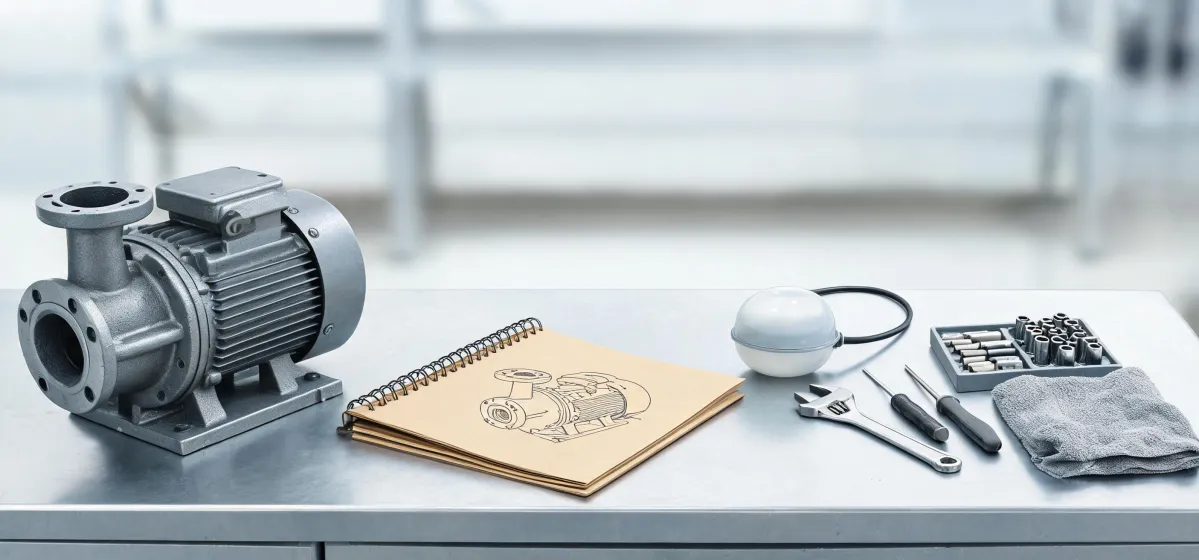
When I say "system," I'm talking about the P382XPRG101 package: the grinder pump, basin, float switches, control panel, and the pre-assembled piping. When I say "pile of parts," I mean buying the pump separately, a basin from one supplier, a float switch from another, and hoping it all fits together.
I've installed both. Twice with the full system, once with the pile of parts. The pile of parts taught me a lesson worth far more than the $250 I saved. And honestly, the savings turned out to be imaginary—the total cost of ownership, including the rework and the cleanup, was the opposite of cheap.
Dimension 1: Factory-Tested Assembly vs. Field-Engineered Guesswork
With the P382XPRG101, the pump comes already mounted on the check valve and guide rail system inside the basin. The floats are clipped in place, wired to the control panel, and the whole thing gets tested before it ships. You pull it out of the crate, drop it in the hole, and connect the discharge pipe.
With my parts-bin approach, I spent an entire afternoon trying to get the float tether length right. It looked fine on the bench. Then the pump cycled on, the float hung up on the pump cord, and the basin overflowed. That was a $600 carpet replacement in a finished basement, plus a very unhappy homeowner. The "savings" from my parts list were gone before Christmas.
To be fair, a skilled installer can absolutely build a custom system that works. But that requires verifying wiring diagrams, float switch options, basin dimensions, and pipe alignments yourself. If you miss one compatibility detail—like I did—the price of that mistake is usually higher than the cost of a factory-tested system. Verdict: the pre-assembled system wins.
Dimension 2: A 10-Minute Tech Support Call vs. Three-Day Delays
Here's the thing nobody tells you about Liberty Pumps tech support: they actually know their product line, and they're happy to verify your selection before you order. It took me years to start using that phone number. I used to think calling tech support was for people who couldn't read the manual. That assumption cost me.
In my second installation, I ordered a replacement grinder pump without calling anyone. I didn't check the voltage rating on the old panel—turns out it was 208V, not 230V. The pump hummed but wouldn't start. I had to pull everything back out, order a new motor, and pay expedited shipping. That "budget" repair ended up costing $400 more than the quote I would have gotten from the tech support line. The worst part? The support guy told me later this is a super common mistake.
Since then, I call Liberty Pumps tech support for every grinder system I sell. It's a 10-minute conversation. They've confirmed wiring questions, checked current availability, and even flagged a code issue I would have missed on the discharge line. In my opinion, that call is the most underused resource in the entire supply chain.
Verdict: If you haven't called Liberty Pumps tech support before ordering, you're guessing. Stop it. (Note to self: this is the one step I never skip anymore.)
Dimension 3: OEM Grinder Pump Components vs. "Almost the Same" Parts
A grinder pump is not a sump pump with a sharper impeller. The clearances between the grinding plate and the cutter are engineered to specific tolerances. If you replace the cutter ring with a generic part, you can end up with a pump that chews paper but jams on a baby wipe. It's like buying a battery for a riding lawn mower—you need the exact group size, not just something that fits the tray. The wrong battery may crank the engine twice, then leave you stranded in the yard.
I once used a third-party check valve on a grinder discharge because it was $18 cheaper. It was a swing check, not a spring-loaded check. The pump short-cycled every time it shut off because the water column slapped back. The homeowner called us six times before I replaced it with the OEM valve. That $18 "savings" cost $350 in labor. And that's not counting the damage to my company's reputation.
There's a useful parallel in the plumbing world: when you replace gate valve on water main, you don't grab a valve with the same pipe size and hope. You verify pressure rating, port size, and stem material. The same logic applies to grinder pump components. Verdict: OEM parts are the safer bet, unless you enjoy service callbacks.
Dimension 4: The Right Tools and Valves vs. "Good Enough"
I've read a lot of hand tools review threads in plumbing forums over the years. The consensus is usually about torque, grip, and durability. But on a real job, a cheap 18-inch pipe wrench can round off a PVC hub fitting if you lean on it wrong. I've been burned twice. Now I keep a torque wrench and a good set of basin wrenches in the truck, and they've paid for themselves many times over.
The same principle applies to valves. If you're laying out the discharge line, a full-port ball valve is a better choice than a gate valve for the periodic shut-off. In an emergency, that one-quarter-turn operation matters. The fact that you know how to replace gate valve on water main doesn't mean you should use a gate valve everywhere. The less turning and fiddling required in a cramped pump pit, the better.
Verdict: Don't use make-do tools or marginal valves on a system that depends on a clean seal. The difference between "good enough" and "correct" shows up in the first pressure test.
Dimension 5: Alarms and Control Panels vs. Silent Failure
The P382XPRG101 system can be configured with an alarm float and a high-water alarm. I used to think alarms were optional, just a way to upsell. Then I had an installation where the pump ran continuously because the float switch stuck, and nobody noticed until the sewage came up through the basement floor drain.
That job was my third big mistake. I stopped treating alarms as accessories and started presenting them as required safety devices. A $150 alarm is cheap compared to the cleanup cost, not to mention the visit from the county health inspector. The most frustrating part of these silent failures is that they're almost always avoidable.
"The cheapest component in your grinder system is the one that fails when you're on vacation."
Verdict: Unless you enjoy paying for sewage cleanup, buy the alarm.
So When Should You Buy the Liberty Pumps Grinder System P382XPRG101?
Most of my customers are B2B—contractors and facility managers. Here's how I now frame the choice.
Buy the full P382XPRG101 system if:
- The pump is going into a finished or usable basement.
- You're not 100% sure about the local code requirements for sewage ejector systems.
- You need a system that works right the first time, without scavenging parts from three different suppliers.
- Your labor rate is higher than the cost difference between the assembled system and the parts list.
Consider a stripped-down pump-only setup if:
- It's a rough-in for a future bath, and you've verified all the component specs yourself.
- You've got a plumber who has installed the exact same model before.
- Your budget has room for unexpected fixes, and there's no finished space below the fixture.
To be fair, the full system isn't the cheapest upfront option. If you are the type who can verify float switch tether lengths, control panel voltage, and guide rail alignment without help, you can save money. I'm not that type anymore. I'd rather pay for the factory-tested system and spend my afternoon on a job that actually needs my attention.
One last note: the first time I installed the P382XPRG101, I assumed the technicians at Liberty Pumps were just salespeople. They weren't. I still kick myself for those first two installs before I called them. If I'd made that one phone call, I'd have saved myself about $2,000 total in rework and lost time.
Take it from someone who documents his own mistakes: the Liberty Pumps grinder system is one of those rare purchases where the certainty is worth more than the sticker price. Trust me on this one.

Maren Jorgensen
Maren Jorgensen is an independent hand tool and torque applications analyst covering wrenches, pliers, screwdrivers, hammers, sockets, ratchets, hex keys, and tool sets. She applies ISO 6789-1 torque-tool conformance principles while examining jaw capacity, leverage, fastener engagement, torque range, accuracy, handle geometry, and material hardness. Her practical guides help tradespeople and procurement teams select suitable tools, plan controlled tightening, and compare durability without relying on brand reputation alone.