When a Liberty Pumps 10PMD1WP 'Fails,' the Problem Is Usually the System
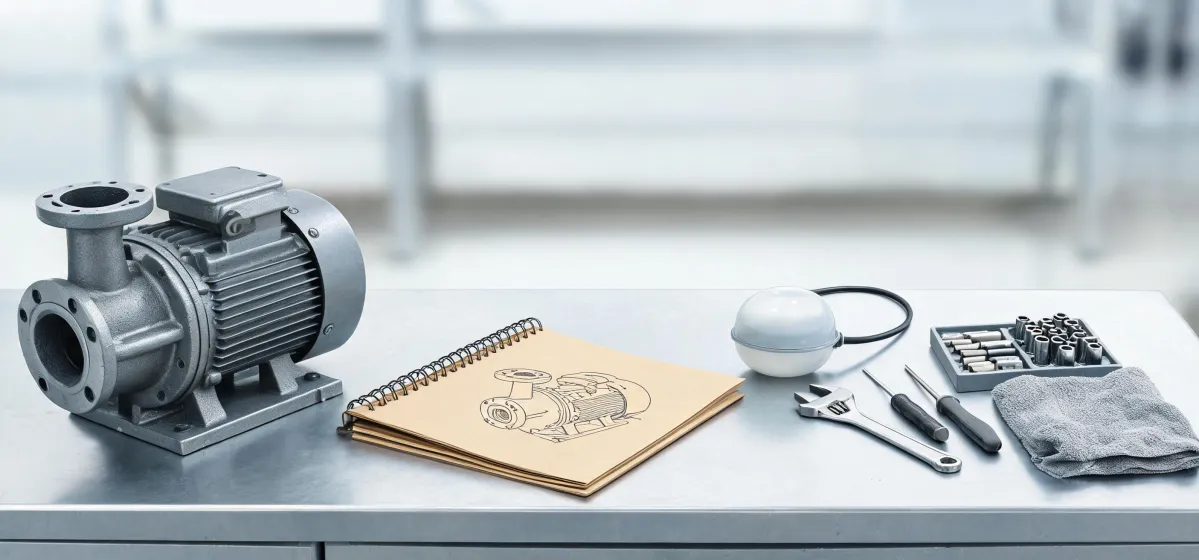
Look, if you're reading this because a "brand new" sump pump won't shut off, I'm not going to open with a product pitch. I'm going to start with a question: what exactly is failing?
I'm the quality compliance manager at a pump distribution company. I review every package before it goes to a contractor—roughly 60 packages a week. In 2025, I rejected 11% of first deliveries because the label didn't match the contents. Sometimes it was the wrong float switch. Sometimes it was the wrong pump model wearing the right barcode. More often than you'd think, it was a missing bag of system screws.
This isn't a story about bad suppliers. It's about a mindset problem that shows up in the field.
The Surface Problem: The Pump That "Doesn't Work"
A contractor calls and says, "That Liberty Pumps 10PMD1WP I put in last week won't cycle." My first thought isn't "bad motor." It's "tell me about the float switch." The 10PMD1WP is a workhorse, but it doesn't operate in a vacuum. It needs a float switch with the right travel, a piggyback plug that actually fits the outlet, and a discharge line that isn't undersized.
Here's the part that trips people up: the Liberty Pumps float switch assembly K001155 may look generic on a shelf. It isn't. The tether length is specific. The bracket is specific. The switch is designed to work with a particular pump curve and basin depth. Swap in a "universal" switch and you're not saving time—you're creating a variable.
I said "order only K001155 for that repair." The purchasing agent heard "find the cheapest float switch that fits." Result: a batch of pumps went out with switches that would cycle too late in a high-water event. We caught it before shipment, but only because we stopped and checked.
That was a communication failure, yes. But it was also a process failure. We didn't have a formal receiving inspection for small components. The third time we found the wrong part in a sealed bag, I finally created a photo-based verification checklist. I should have done that after the first time.
The Deeper Problem: A Pump Is Not a System
What I mean is this: a pump is one link in a chain. The chain includes the float switch, the check valve, the control panel, the alarm, the basin, the pipe connections, and the fasteners that hold everything together. If any one of those links is wrong, the pump gets blamed.
Three things I check on every package, in this order: part numbers match the paperwork; the float switch assembly is the exact model listed; the system screws are the right thread and coating. It sounds tedious. It's also faster than explaining to a customer why their pump is running intermittently.
Take system screws, for example. By "system screws," I don't mean whatever is in the bottom of your drill bag. I mean the specific fasteners called out in the installation manual—corrosion-resistant, correctly threaded, matched to the bracket. When an installer substitutes a drywall screw because it's close enough, that screw becomes a single point of failure. Vibration, moisture, and load will find it eventually.
This is also where the tool conversation gets interesting. When was the first cordless drill made? Black & Decker introduced the first one in 1961. Before that, every job was tethered to an outlet. Today, a 20V MAX 1/2-inch hammer drill kit (DCD798P1) can sink an anchor into concrete without breaking a sweat. But the tool doesn't tell you which screw to use. It just helps you install the wrong fastener faster.
The deep problem isn't a lack of horsepower. It's a lack of verification. We assume a new pump is complete. We assume the part number on the box is the part number inside. We assume the screw in the bag is the screw the design calls for. Those assumptions are where failures start.
One more layer: even when the parts are right, the process often isn't. I've watched teams spend 30 minutes checking a pump's amperage draw and zero minutes checking whether the float switch tether is the length specified in the manual. The amperage matters. The tether matters more.
What This Problem Actually Costs
Let's put numbers on it. A correct Liberty Pumps float switch assembly K001155 costs maybe $40–$60 from a distributor (pricing as of January 2025). A service call to replace an incorrect float switch runs $150–$400 once you include travel, diagnosis, and labor. And if the pump is in a finished basement, the water damage number moves into another decimal range.
That's the value-over-price argument, and it isn't just theory. In 2024, a contractor bought a budget pump online to save about $90. The pump arrived with a float switch that had no manufacturer label. He installed it anyway. It worked for two weeks, then the switch contacts welded shut. The pump was fine. The switch was the failure. He paid $220 for a service call, lost half a day, and had to order the correct switch anyway. The total cost was more than three times what he saved.
Never expected the cheap pump to be the reason he lost money. Turns out the problem wasn't the pump at all—it was the "it'll work fine" approach to system components.
From a quality-control perspective, I see the same pattern in orders of every size. The lowest-priced component rarely saves money when it causes rework. In my experience auditing inbound deliveries over the last four years, the cheapest option has cost more in callbacks and labor in roughly six out of ten cases. That's not a scientific number, but it's an honest one.
I'll also add this: per FTC guidelines (ftc.gov), performance claims need to be truthful and substantiated. That's the legal baseline. But a compliant advertising claim doesn't tell you whether a pump's float travel is right for your basin. Legal claims and matched specifications are two different worlds.
The Short Solution: Order a System, Not Just a Pump
After all that, the fix is simple. It just isn't glamorous.
- Don't order a pump by model number alone. Write out the full system: pump, float switch assembly, check valve, alarm, control panel, and fasteners.
- If the manual calls for a specific part, use that part. If it says Liberty Pumps float switch assembly K001155, don't accept "compatible" as a replacement.
- Treat system screws as real components. They're not packaging material.
- Use the right installation tools—a 20V MAX 1/2-inch hammer drill kit (DCD798P1) is a solid choice for concrete anchoring—but verify the bit size and fastener spec before drilling.
- Inspect deliveries when they arrive. Ten minutes spent checking part numbers is cheaper than two hours spent replacing a mislabeled component.
A Liberty Pumps 10PMD1WP is a good start. Pair it with the right float switch assembly and the right screws, and it becomes a system you can rely on. That's the difference between a pump that works and a system that works.

Maren Jorgensen
Maren Jorgensen is an independent hand tool and torque applications analyst covering wrenches, pliers, screwdrivers, hammers, sockets, ratchets, hex keys, and tool sets. She applies ISO 6789-1 torque-tool conformance principles while examining jaw capacity, leverage, fastener engagement, torque range, accuracy, handle geometry, and material hardness. Her practical guides help tradespeople and procurement teams select suitable tools, plan controlled tightening, and compare durability without relying on brand reputation alone.