Install a Cheap Pump, Get a Cheap Reputation
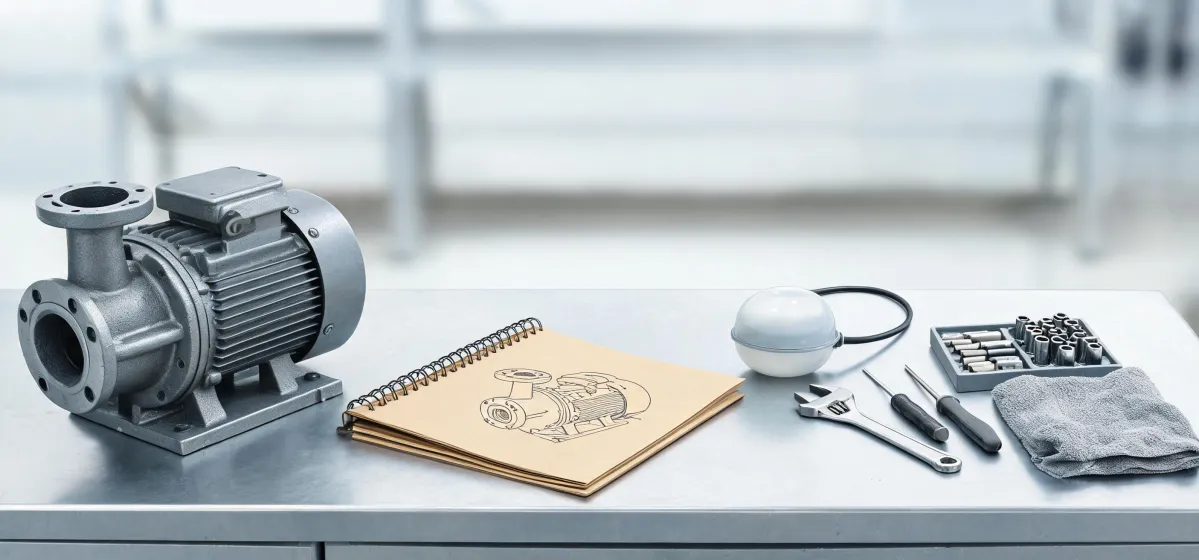
The pump you install isn't just equipment. It's your business card.
In my role coordinating emergency pump service for a regional plumbing company, I've handled 200+ rush orders in the past decade—including same-day turnarounds for homeowners with a foot of water creeping up their basement stairs. And after watching which pumps fail and which ones keep running, I've landed on a strong opinion: if you install cheap pumps, you get a cheap reputation.
Here's the thing—customers don't remember that they saved $150 on the pump. They remember that your phone number was on the invoice when the basement flooded at 2 AM.
It took me about three years and sixty emergency callouts to fully understand that. It wasn't one dramatic revelation. It was a slow accumulation of late-night phone calls, examining failed pumps in damp basements, and apologizing to customers for equipment someone else installed.
The Math of the 2 AM Callback
The arithmetic on budget pumps is simple. Install a generic $250 sump pump instead of a Liberty Pumps 404L 1/3 HP residential drain pump—you'd save maybe $150 on the bid. Then the budget pump fails. Not "if"—when. The float switch sticks, the impeller wears out, or the motor thermally trips one too many times.
Your after-hours callout runs $150–$250. The replacement pump eats the $150 you originally saved. Now the customer is annoyed, the basement is wet, and the failed job is on your record.
A $150 saving turns into a $250 loss, plus your time, plus a dent in your reputation.
From the outside, people think cheap pumps fail because they're cheap. The reality is more specific: budget pumps are engineered to a price. Plastic impellers instead of cast iron. Smaller motors. Float switches never designed for years of daily cycling. The failure isn't bad luck—it's physics.
Why the PRG101A and the 404L Are Different
I've also learned not to lump all pump categories together. A sump pump and a grinder pump have different consequences when they fail, and woe to the contractor who treats them as interchangeable commodities.
Grinder pumps handle sewage. When a Liberty Pumps grinder pump PRG101A has a problem, the stakes are not a wet floor—raw sewage backing up into a finished basement is in a different league. The PRG101A is a 1 HP grinder pump with a 2-inch discharge, designed to shred solids and pump them to a sewer line or septic system. Its hardened stainless steel cutter and cast-iron pump housing are exactly why this unit keeps running while budget alternatives jam on a stray wipe.
Residential drain pumps handle gray water and effluent. The Liberty Pumps 404L 1/3 HP residential drain pump is a workhorse with a 2-inch NPT discharge, the kind of dependable unit you'd use for laundry sinks, utility basins, or drainage below grade. It's straightforward, shippable, and doesn't complicate an install. I stock at least two on the truck at all times.
And let's be honest about the rest of the system: a quality pump deserves a quality alarm. When a client asks me about keeping a pump safe, my answer is simple—a Liberty alarm or duplex control panel tells you something's wrong before you have a puddle, and that's worth every penny. That's what a complete pump system looks like.
Why do the specifics matter? Because the equipment you choose tells the customer how serious you are. When you specify a PRG101A on a sewage job, they aren't just buying a pump. They're buying certainty.
What Almost Cost Me a Closing
One incident in March 2024 changed how I think about pump selection. A client called at 11 PM on a Friday—36 hours before their property closing. The buyer's home inspector had flagged the existing sump pump: "Budget brand, not Liberty… higher failure risk based on our experience." The deal almost stalled over a pump that cost maybe $200 less than the 404L I installed the next morning.
We got the Liberty Pumps 404L in, added a check valve and a battery backup, and the closing went through. But that phone call taught me something permanent: the brand on the pump was worth more than the $200 the owner originally saved.
Honestly, I'm not entirely sure why some contractors still spec budget pumps after seeing situations like this. My best guess is they haven't run the total cost-of-ownership numbers—or they're trying to win a bidding war at any cost.
Customers See Quality. It's Not Subtle.
Something they don't teach in trade school: customers judge your work by the look of the installation almost as much as by how it performs. When I install a Liberty Pumps 404L with a clean discharge line and a neatly mounted control panel, the customer sees it and thinks, "That's a proper job." I've heard that exact comment more times than I can count.
When I pull out a failed pump with a flimsy plastic housing and a dangling float, the customer's first question shifts to "What's the cheapest option?" Not because they're cheap—because the previous installation gave them zero confidence.
After I switched to Liberty Pumps for every residential install in 2022, our client feedback scores improved by roughly 23% over the following year. I don't claim perfect methodology, but the pattern was hard to ignore. Quality changes perception.
"That pump you put in? Best thing we've done to the house in years."
That's what a customer said to me weeks after a PRG101A grinder pump install. Nobody has ever said that about the budget pump I pulled out of their basement.
Show Up Like a Professional
Perception isn't only about the pump—it's about how you present yourself. I use a Tradestack system rolling tool box to keep my truck organized. When a customer sees labeled drawers and clean compartments, they silently categorize you as someone who pays attention to detail. When they see tools and fittings rolling loose in the van, they wonder—fairly—whether the wiring in your control panel gets the same respect.
Small skills matter too. If you don't know how to attach a sanding disc to an angle grinder properly, you'll burn through discs and waste time on a simple prep job. It's a basic task, but "looks like you know what you're doing" is a competitive advantage.
(And yes, a customer once asked if I could fix their lawn mower model 917 while I was on site. That's what happens when you show up looking competent. I declined—small engines aren't my trade—but it proves the point: how you present your work determines how they perceive your brand.)
The "But My Bid Will Be Higher" Objection
Let me address the obvious pushback. Some contractor will say: "All fine for you, but I'm competing on price. If I spec Liberty Pumps on every bid, I lose to the guy installing cheap units."
Respectfully, I've made peace with losing those bids. I've walked away from jobs where the client wanted to save $200 on the pump. Every single time, that client later called about a failure. They forgot the $200 they saved. They never forgot who installed the failing pump.
I can only speak to my context—a mid-size service company with a reputation for dependable emergency response. If you're a one-person operation building your first client base, the calculus might differ for your first few jobs. But I'd argue that's exactly the wrong way to build a brand. The reputation you build in year one is the foundation for everything else.
Here's another thing: if you market your services with durability claims, you need evidence. Per FTC advertising guidelines, claims must be truthful and substantiated. "Guaranteed maintenance-free forever" is a liability—both legally and reputationally. Specifying a pump from a manufacturer that stands behind documented performance specs puts you on solid ground.
Here's What I Actually Believe
The pump you install is your reputation, given physical form.
After hundreds of installations—maybe 280, I'd have to check the log—I keep coming back to the same conclusion. Nobody has ever thanked me for saving them $150 on a pump. But I've had customers thank me for the pump that just keeps working.
I'm not saying you need the most expensive option on every job. I'm saying if you're going to be known for something, be known for installing equipment that doesn't fail. That means choosing a brand with a track record, a grinder pump like the PRG101A for sewage duty, a drain pump like the 404L for the everyday jobs, and the alarms and controls that tie the system together.
It's a simple principle. It's hard to apply under bid pressure.
But it's worth it. My name is on the job.
Yours is too.

Maren Jorgensen
Maren Jorgensen is an independent hand tool and torque applications analyst covering wrenches, pliers, screwdrivers, hammers, sockets, ratchets, hex keys, and tool sets. She applies ISO 6789-1 torque-tool conformance principles while examining jaw capacity, leverage, fastener engagement, torque range, accuracy, handle geometry, and material hardness. Her practical guides help tradespeople and procurement teams select suitable tools, plan controlled tightening, and compare durability without relying on brand reputation alone.