Liberty Pumps LCU-MS Series vs. Piecemeal Sewage Pump Systems: A Distributor's Comparison Guide
Why Compare These Two Approaches
When I'm coordinating emergency pump replacements, the difference between a single-SKU system and a build-your-own setup isn't academic. It's the difference between a 2 AM problem you solve in one trip and a 2 AM problem that turns into three trips.
I've handled 200+ rush orders in the pump and plumbing space over the last 12 years — everything from a $400 condensate pump swap to a $15,000 duplex sewage system install with a 36-hour deadline. The thing that never shows up in a spec sheet: the products you choose in an emergency determine how many times you'll be back.
So this comparison focuses on what actually matters when the clock's ticking: what's in the box, how long installation takes, and what happens six months later when the invoice is forgotten and your reputation is on the line.
Comparing here: Liberty Pumps LCU-MS series (complete factory-matched system) vs. piecemeal sewage pump systems (pump + control panel + alarm + check valve, sourced from multiple vendors).
Dimension 1: What's Actually in the Box
This is where the comparison stops being theoretical.
Liberty Pumps LCU-MS Series
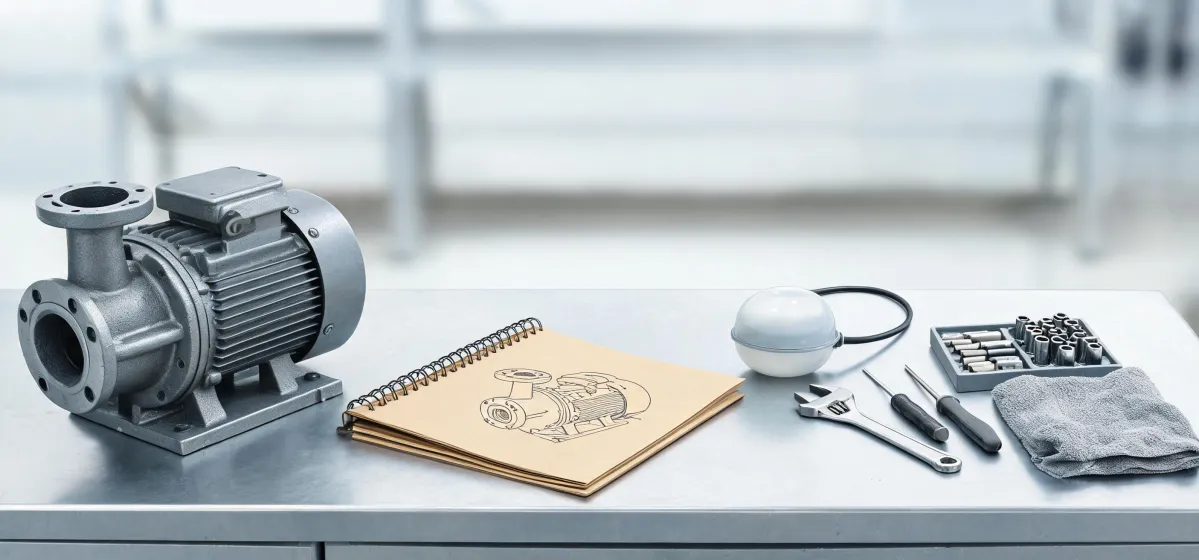
The LCU-MS arrives as a complete, factory-matched system. Depending on configuration, you're getting:
- The pump itself — including Liberty's Pro 370 line when that's the spec called out
- Matched control panel with mechanical float switch
- Integrated alarm or alarm-ready connections
- Check valve rated for the system
- Installation documentation that matches what's actually in the box
One SKU. One warranty. One phone number if something fails.
Piecemeal Systems
The alternative: pump from one distributor, control panel from another, alarm from a third, check valve from Amazon because you need it by Tuesday. Now you're matching float switch types, control voltage, and discharge sizes across three or four spec sheets.
Does it work? Usually. Does it work as reliably as a factory-matched system? Honestly, the failure rate tells the story.
The real advantage of a complete system isn't convenience — it's that the parts were tested together before they ever reached your truck. A mismatched float switch on a piecemeal setup is the number-one cause of "the pump runs but the alarm never triggered" calls I get.
Bottom line: LCU-MS wins on integration. Piecemeal can undercut on sticker price, but the compatibility gamble comes due eventually.
Dimension 2: Installation Reality
Here's where field experience separates the two options.
Time Comparison
From coordinating installs in the field:
- LCU-MS complete system: 1.5 to 2.5 hours for simplex, 3–4 hours for duplex. Components are matched, so installation is mostly mechanical.
- Piecemeal system: 4 to 6 hours, including the time you burn confirming compatibility, fabricating brackets that should have been included, and troubleshooting why the alarm float trips at the wrong water level.
That 2-to-4-hour difference is not trivial when you're trying to close out a job before the building opens.
Tools You'll Actually Need
Neither install requires exotic equipment. For the Liberty Pumps Pro 370 installation process specifically, you're looking at a standard kit:
- Screwdriver set — I've read enough screwdriver set review content to know most contractors overspend here. Anything in the $30–$50 range with a solid Phillips #2 and a flathead covers every terminal and panel connection on the LCU-MS.
- Reciprocating saw or PVC hand saw — for pipe cuts
- Hole saw — this is where most people guess wrong. If you're drilling through a basin or wall for 2-inch PVC pipe, the correct hole saw is typically 2-3/8 inches or 2-1/2 inches, depending on the fitting OD and manufacturer. This isn't a "read the AC-225 arc welder manual twice before touching anything" situation, but it's a measurement you don't want to get wrong on a Saturday. Go larger rather than smaller — shimming a loose pipe is easier than un-enlarging a hole in a sealed basin.
Bottom line: LCU-MS installs faster because it was designed as a system. Piecemeal installs cost you time in compatibility checks — and compatibility checks always take longer than you planned.
Dimension 3: Failures, Warranty, and Reputation
This is where the emergency-specialist perspective matters most.
When a piecemeal system fails, the diagnostic process is brutal. Was it the pump? The float switch? The control panel? The wiring between them? You're calling three vendors and each one says, "Not our part."
With LCU-MS, diagnosis is one call to one manufacturer. If it's a warranty claim, you're dealing with one company, one RMA number, one replacement shipment.
I still kick myself for a job back in 2022 where I saved $180 by building a system from three different vendors. The alarm failed eight months later due to a signal compatibility issue with the pump's control panel — something none of the spec sheets made clear. We ate the service call, and the customer never called us back.
That's the cost that never shows up in a BOM. When you install a mismatched system and it fails, your client doesn't blame the alarm manufacturer. They blame you.
There's also a historical angle here. The "buy everything local, source each part separately" mindset comes from an era before overnight logistics and factory-matched systems were reliable. Today, one well-organized single-vendor system often beats a disorganized local assembly — even if the local option technically ships faster.
Bottom line: LCU-MS costs more upfront. It almost always costs less over the life of the system — especially when you factor in the service calls you don't make and the clients you don't lose.
Choosing Between Them
Both approaches have a place. Here's how I'd decide:
Go with the LCU-MS (or similar complete system) when:
- The system is for a customer who'll call you when something goes wrong
- Response time matters (emergency replacements, weekend calls)
- You're installing for a commercial or multi-unit property
- You want one warranty point of contact
Consider a piecemeal system when:
- You're building a temporary or non-critical sump setup
- You already have compatible parts in stock from previous jobs
- You genuinely need to hit the lowest possible price point
- You've done the compatibility homework and are confident in every match
If you've ever been at 11 PM wondering whether the float switch you grabbed from the truck will work with the control panel you just installed — you already know which side of this comparison you want to be on.
Trust me on this one: the call you're avoiding is the one where a duplex system fails during a dinner rush and the client says, "The last guy said he saved me money." There's something satisfying about getting that 2 AM call, showing up with one box, and having the system running before sunrise.

Victor Salcedo
Victor Salcedo is an independent fastener, anchor, and spring analyst covering screws, bolts, nuts, washers, rivets, anchors, compression springs, extension springs, and torsion springs. He uses ISO 898-1 property classes alongside clamp-load, thread engagement, proof load, corrosion exposure, anchor substrate, spring rate, travel, and fatigue-cycle checks. His engineering explainers help designers and buyers specify reliable joints or elastic elements, compare materials and finishes, and avoid mismatched strength assumptions.