Local Dealer vs. Online Supplier: How I Source Pumps and Maintenance Equipment for a 3-Building Facility
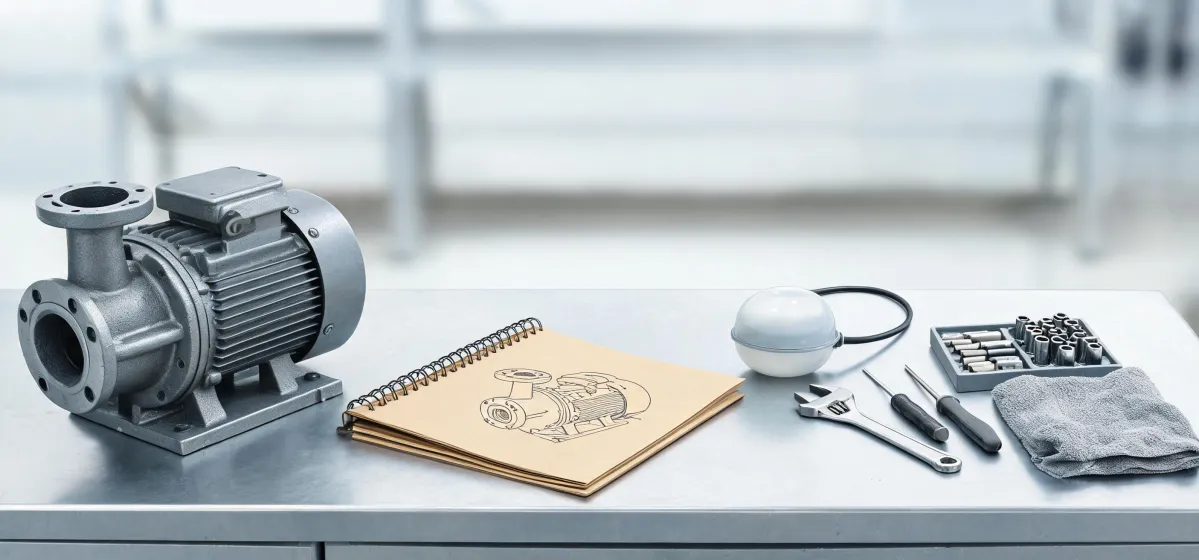
Two sourcing paths, and why I stopped guessing
When I took over purchasing for our three-building operation in 2020, I inherited a vendor list with four names and no explanation attached to any of them. Two were local distributors. Two were online sellers. Every time a sump pump failed or a mower deck cracked, someone on the team picked a vendor—and I never figured out on what basis.
So I ran both paths side by side for three years. Same specifications, same buildings, same maintenance crew. Here's what I compared:
- Total cost, not the posted price
- Lead time and whether parts were actually in stock
- Documentation and technical support
- What happens after something fails
That's the framework. Here's how each dimension actually shook out.
Dimension 1: Total cost (the sticker price is the smallest number)
Most buyers focus on the per-unit price and completely miss everything attached to it—freight, fittings, restocking fees, and the labor hours burned chasing a part that doesn't match the spec.
Our sewage and sump pumps are all Liberty Pumps units. We standardized on them in 2021 after a string of grinder pump failures with a cheaper brand, and the standard has held across our duplex systems, check valves, and control panels. When I quote a replacement, the dealer's price for the same model runs roughly 8–12% higher than the lowest online listing I can find (based on distributor quotes and online listings, May 2026; verify current rates for your region).
On paper, online wins. On the invoice, that gap disappears fast. The dealer price already includes the discharge kit, the check valve, and the alarm. The online listing frequently doesn't—it's the pump alone. Add the fittings and freight on a 60-pound unit, and the dealer often lands within a few dollars.
I want to say the last comparison I ran came out to a $14 difference on a 1/2 HP sewage pump. Don't quote me on the exact figure—I might be misremembering after a long quarter—but the pattern has been consistent across roughly 40 orders since 2022.
The causation runs in a direction I didn't expect at first. I used to assume dealers charged more because they could. What I've come to believe is the opposite: dealers hold local stock, and holding stock costs money. You're not paying a markup for the privilege of shopping local. You're paying for the inventory and the liability that sits on a shelf near your building.
Dimension 2: Lead time and stock
This is where the comparison stops being close—at least for us.
When a sewage pump fails in a building with tenants, we don't have a week. The local dealer usually has the common models on the shelf, and if they don't, they can often pull it from a branch the same day. Online, "in stock" frequently means "ships in 2–3 business days," and on a pump that's already failed, that's a rental portable pump plus an angry facilities call at 7pm.
The online side wins on selection, though. If I need a specialty item—a specific Liberty Pumps Ascent II-RW round-bowl macerating toilet, or a NightEye alarm unit for a duplex system—the dealer might not stock it and the online seller will. I've learned to split the two almost by default: commodity pumps and standard parts from the dealer, long-tail and one-off items online.
Dimension 3: Documentation and support
Here's the one that genuinely surprised me.
I used to download everything. If we bought a piece of outdoor power equipment—a chainsaw, a mower—the first thing I did was find the PDF manual and file it in the shared drive. When our mower deck needed shimming, I'd grab the lawn mower manual PDF and hand it to the crew. That still works, and it's still the fastest way to answer a routine question.
But when something's genuinely wrong—a pump short-cycling, a grinder pump tripping the breaker, a float stuck mid-cycle—the PDF doesn't answer it. The dealer's counter staff do. I've had a counter guy walk me through a float calibration over the phone in four minutes. I've also waited two days on an online seller's email queue for a reply that basically said "check the installation manual."
That's not a knock on online sellers across the board. Some are excellent. But for anything with a motor, a float, or a control panel, the person behind the counter is part of what you're buying—whether you realize it or not when you click "add to cart."
Dimension 4: What happens when something fails
I learned this one the expensive way, and it's the dimension I'd tell any new facilities buyer to weight the heaviest.
In 2023 I saved about $200 ordering a grinder pump online instead of through the dealer—same model, better list price, free shipping. The unit arrived with the wrong discharge flange. Return shipping was on me, the replacement was backordered six days, and we ended up renting a portable pump to keep the lift station running in the meantime. The "saving" cost us somewhere north of $600 once the rental, the reshipping, and the overtime hours hit the books.
The 'cheaper option' looked smart right up until the flange didn't fit. Net loss by my own count: roughly $600, plus one uncomfortable phone call from the property manager.
What a good dealer does in that situation is hand you a replacement off the shelf and sort the paperwork out afterward. That's the entire value. Everything else is pricing, and pricing is the easy part to compare.
How to choose—by scenario, not by rule
I don't think there's a universal answer here, and I'd be suspicious of anyone who says there is. What's worked for us is a scenario split:
- Failed or failing equipment on a live building: dealer. Every time. The premium is small and the downtime cost is enormous.
- Planned replacements and stock spares: either, whichever is cheaper on a full landed-cost basis. On planned work, a two-day shipping window is fine.
- Specialty models or long-tail parts: online. The dealer may not carry a Liberty Pumps Ascent II-RW, and it's not worth asking them to order one just to keep the relationship warm.
- Anything with a control panel or a warranty claim: dealer. You want a person, not a portal.
I also want to be fair to the online side: for commodities with no installation complexity—gaskets, check valves, standard float switches—online has been cheaper and just as reliable for us. I'd put the split at about 70/30 in favor of the dealer overall, but the 30% is real money and I'm not going to pretend otherwise.
The efficiency angle matters here too. When I finally systematized this—dealer for anything time-sensitive, online for anything planned—our average resolution time on a pump failure dropped from about four days to under a day. That's not a spectacular number. It's just the difference between a procedure and a scramble.
There's something satisfying about finally having this written down. I don't agonize over every order anymore, the property managers stopped calling me at 6pm, and the next person who takes this job gets a policy instead of a spreadsheet with four unexplained names on it.
Pricing references are general and reflect one operation's order history; actual pricing varies by vendor, region, and time of order. Verify current rates and specifications directly with your distributor.

Amara Nwosu
Amara Nwosu is an independent hydraulic tool and pump systems analyst covering jacks, cylinders, pullers, torque wrenches, hand pumps, power pumps, and porta-power equipment. She applies ISO 4413 safety principles while examining rated pressure, cylinder force, stroke, oil volume, flow, return type, hose condition, load holding, pressure loss, and relief protection. Her technical guides help maintenance and construction teams configure compatible systems, verify safe capacity, and diagnose slow or unstable operation.