The $42 'Savings' That Almost Became a $22,000 Problem
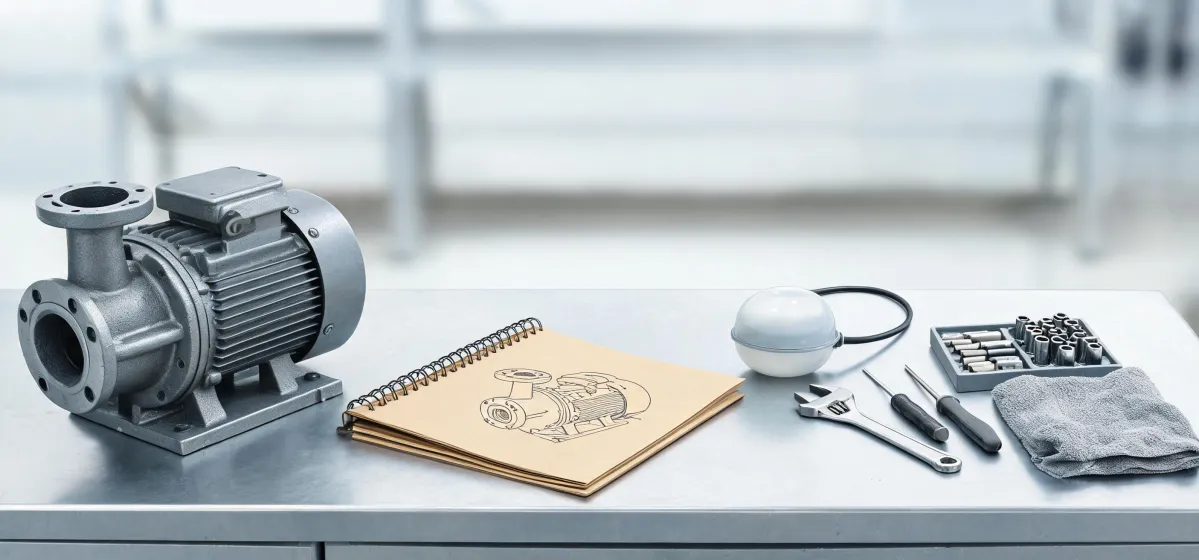
The Tuesday Morning That Almost Slipped Through
This past March, I walked onto the warehouse dock and caught the tail end of a shrink-wrap cycle. Twelve Liberty Pumps P382LE41 sewage ejector systems were stacked on one pallet, each packed with a 30-0042 check valve, a float switch, and a control panel. The shipment was headed to a regional distributor in Ohio. Their end customer was a contractor doing a commercial basement renovation: three bathrooms, below-grade drainage, and a deadline that had already slipped twice.
My role at Liberty Pumps is reviewing shipments before they reach customers. I've been doing this for over four years, and I review roughly 200 unique orders annually. In 2025, I rejected about 4% of first deliveries for spec deviations. Most of those catches were unremarkable—a missing gasket, a wrong bracket, a torque rating that didn't match the drawing. This one almost wasn't a catch at all.
When I first started this job, I assumed the paperwork was the critical part. If the model numbers matched the purchase order, we were good. Three rejected batches later, I learned that the paperwork tells you what's supposed to be in the box. It doesn't tell you what's actually in the box.
The Check Valves Were Off
I do the same walk-around every time: confirm the model numbers on the P382LE41 units, verify accessory quantities, open one unit to check the float switch wiring. That morning, the model numbers matched, and the packing list was clean. But the check valves caught my attention.
Our standard 30-0042 check valve has a small casting mark on the side of the body. I've looked at enough of these to notice when it isn't there. The valves on this pallet didn't have the mark, and the body casting looked slightly rougher. Honestly, if I hadn't been deliberately looking, I would have missed it.
I pulled the purchase order, and there it was. Our purchasing manager had approved a secondary supplier for the valves. The cost difference: $3.50 per unit. On a twelve-unit order, that's $42 in savings.
I want to say I handled it calmly. I didn't entirely. I've seen what a spec deviation costs by the time it reaches a job site.
The Argument
"Just ship it," the warehouse lead said. "The contractor's waiting. Same dimensions, same threads—they'll fit."
That's the thing about check valves. They'll fit. They'll function for a while. And then, under backflow pressure on a cold morning in a half-finished basement, one of them won't seat properly. A check valve failure on a sewage ejector system isn't a drip—it's a flooded mechanical room, a contaminated floor, and a contractor who's on the phone with his lawyer.
The purchasing manager pushed back too. "The spec called for a 30-0042 check valve, and that's what we're shipping. Nobody can tell the difference."
I stood my ground, which was easier because of what happened in Q1 2022. We received a batch of eighty units where the spec was visibly off. The vendor claimed the parts were "within industry standard." We rejected the batch, and they redid it at their cost. Now every contract we sign includes specific test requirements and no substitutions without written approval.
That morning, we pulled all twelve check valves off the pallet and ran a pressure test. Three of the twelve failed to hold spec.
Let me put that in perspective. $42 in savings, and a quarter of the valves couldn't hold pressure. If that pallet had shipped and those valves had been installed, the rework would have been well into five figures before legal entered the conversation.
Also on that pallet was a separate order for the same distributor: a Liberty Pumps 251 sewage ejector pump, replacing a unit that had been in service since 2011. The contractor told us the original 251 was still running when they pulled it—just noisier than the customer wanted. Fourteen years of service. That's the standard we're expected to protect. Shipping a bad check valve on the same pallet as that replacement would have undercut everything.
Why Verification Always Wins
I called the distributor myself that afternoon. Not to pass blame—to give them a heads-up. "Your order is going to be two days late," I told the dispatcher. "We caught a component failure, and we're replacing it with the correct part. You won't have to worry about a callback on this one." He was quiet for a moment. Then he said, "Thanks for checking. I'd rather explain a delay to a contractor than explain a flood."
That's exactly how I see it. When you catch a problem at the dock, the fix costs time. When you catch it after installation, it costs time, money, and trust—usually in that order. The distributor was still annoyed, but the contractor installed all twelve systems without a single callback. On our follow-up call, I told the distributor that I'd rather send a correct order two days late than have an installer uncover a problem in a finished basement. There is no good moment for a check valve to fail.
Here's what four years of this job taught me: the most expensive words in this industry are "it'll probably be fine." I've heard them about torque specs, wire gauges, float switch settings, and check valve sources. Every time someone says that, I ask them to show me the test data. When there's no test data, that's when the problem gets real.
Small Details, Big Failures
This experience changed how I review everything—not just valves. I now open every control panel that goes through our dock. On this same order, I found a panel with loose door screws. Someone had used cabinet hardware screws—wrong thread pitch, wrong length—instead of the machine screws specified on the drawing. A cabinet screw backs out under vibration. On a control panel mounted to a sewage ejector system, vibration is constant.
People contact us with these exact issues all the time. One customer called because the screws on their pump cover were stripped beyond recognition. They'd bought a budget screwdriver set, and their first question was "where are screwdrivers made," because they assumed the screw was defective. The screw was fine—the screwdriver tip was soft and rounded, slipping under torque. Another customer asked "what size are cabinet hardware screws" after using one to reattach a control panel lid. The honest answer: they're usually #8-32 or #10-32, depending on the cabinet knob or pull. But the bigger issue was that they're not the machine screws specified for the panel enclosure. A fastener designed for a cabinet door doesn't belong on a vibrating metal box.
These seem like trivial details, but they're not. The right screwdriver, the right fastener, the right check valve—those are the differences between a system that lasts fourteen years and one that fails in fourteen months. The pump is the heart, but the accessories are the circulatory system. Both have to be correct.
It's not always easy to hold the line. The pressure to ship is real, and the person who causes a two-day delay is visible in a way that the person who prevents a failure isn't. But I've learned to be okay with that. The outcome is what matters.
Bottom Line
That shipment went out two days late with the correct 30-0042 check valves. The fix cost $504 in expedited shipping and about six hours of warehouse overtime. The alternative—shipping it as-is and hoping the valves held—could have easily cost $18,000 or more in water damage alone. I know because I've seen that number on a claim report.
Five minutes of verification beats five days of correction. That's not a slogan; it's a spreadsheet. Check your specs. Check your components. And check your fasteners—because the details you don't check will eventually become the problem you can't ignore.

Maren Jorgensen
Maren Jorgensen is an independent hand tool and torque applications analyst covering wrenches, pliers, screwdrivers, hammers, sockets, ratchets, hex keys, and tool sets. She applies ISO 6789-1 torque-tool conformance principles while examining jaw capacity, leverage, fastener engagement, torque range, accuracy, handle geometry, and material hardness. Her practical guides help tradespeople and procurement teams select suitable tools, plan controlled tightening, and compare durability without relying on brand reputation alone.