Why the Pump Isn't the Problem: A Quality Inspector's View on Liberty Pumps Installations
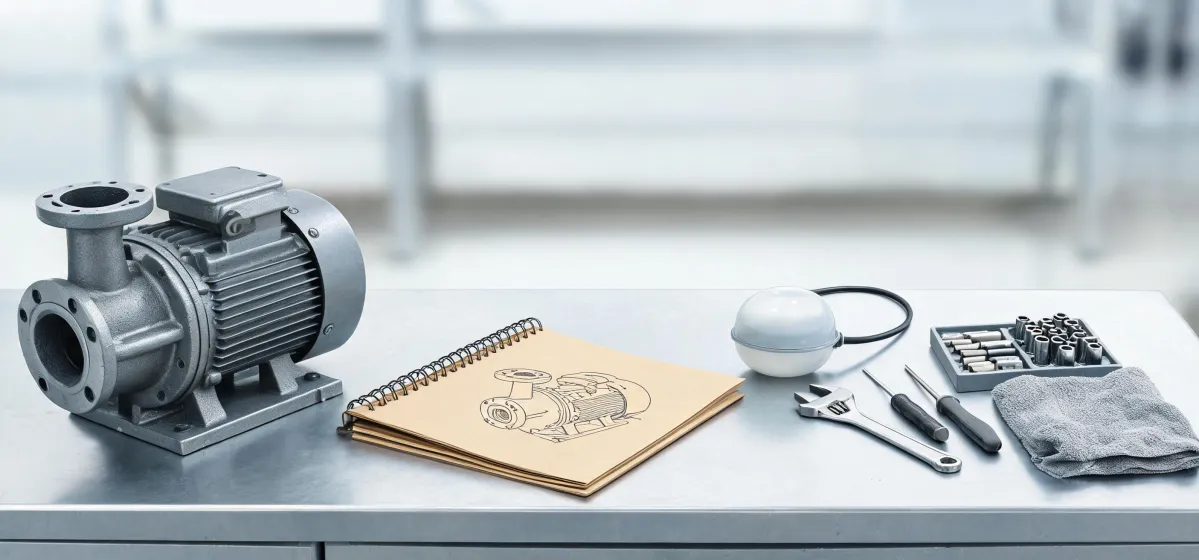
I'll say it plainly: the pump is rarely the problem. In the residential pump packages I review—about 340 a year, plus callbacks I investigate from our dock—the failure almost always traces back to a skipped check, not a defective pump.
I'm the quality and compliance manager at a regional plumbing distributor. Roughly a third of our annual volume is Liberty Pumps products: sewage pumps, drain pumps, grinder packages, alarms, control panels, check valves, and battery backup systems. I check every order before it leaves the dock, and I've rejected about 4% of first shipments in 2025 for spec mismatches. None of those were bad pumps. They were verification failures.
So here's my position: a good pump can still fail if the installation review is weak. The only way to keep residential pump callbacks low is to catch small mistakes before they become expensive ones.
Why I Keep Saying the Same Thing
Five minutes of verification beats five days of correction.
It's not a slogan. It's a cost lesson from Q1 2025, when we audited 58 site callbacks. Eleven were caused by something an installer could have caught in a pre-job check: a float switch tangled in the pump cord, a check valve installed backward, a discharge line with no slope. The pumps were still running. The installations weren't right.
The Liberty Pumps Ascent 2 Is Not a Magic Box
The Liberty Pumps Ascent 2 is one of my favorite residential solutions for a below-grade bath. It macerates waste and pumps it up to an existing sewer or septic line, which saves you from breaking into a concrete slab. It's complete, compact, and built for a job that would otherwise require excavation. But it has limits, and the manual lists them.
A contractor on one project wanted the liberty pumps ascent 2 for a basement bathroom. They had measured the vertical lift: 12 feet. Good. But they hadn't counted the 60-foot horizontal run with three 90-degree elbows. Total dynamic head changes the calculation. The system ran, but the flush was weak. The homeowner called it broken. The pump wasn't broken. The pipe-run math was.
That's the pattern I see with every good pump. The pump does its part. The person designing the discharge run has to do theirs.
The Liberty Pumps 404 1/3 HP Residential Drain Pump: Simple to Install, Easy to Mess Up
The Liberty Pumps 404 1/3 hp residential drain pump is the workhorse of laundry and utility drainage. It fits in tight spaces, handles a laundry tray, a standpipe, a condensate line, or a water heater pan, and it's dependable. I specify it often. But it is not a universal fix.
The failures I see with the 404, in order: no check valve, a check valve installed backward, and a float switch that can't move freely because the pump was set off-center in the basin. Each of those takes about ten minutes to prevent.
Last fall, a spec sheet called for an 800 series compact washer dryer set in a closet with no floor drain. The mechanical plan included the 404 to move wastewater up to an existing overhead drain line. The pump was right. The piping wasn't. The installer ran the discharge up 7 feet, then looped it back down 3 feet before tying into the drain. Every time the pump shut off, water in the loop drained back and the check valve closed hard. The pump short-cycled, and the customer noticed the noise. Again: not a pump defect. A piping layout issue.
The most frustrating part is that these are not new problems. You'd think written specs would prevent the same check-valve orientation mistake, but field conditions make old mistakes easy to repeat.
The Checklist That Actually Prevents Callbacks
I don't use a complicated protocol. I use a checklist. The checklist is the cheapest insurance I know.
- Model number. Compare the pump model against the order, not the box label alone. A substituted pump can look identical and still have different voltage or float action.
- Float switch. Confirm the float is set to the correct operating range and moves freely in the basin.
- Check valve orientation. The arrow on the valve body exists for a reason. I've seen it installed backward more times than I can count.
- Discharge run. Count vertical lift, horizontal run, and every fitting. Compare that to the pump curve in the current manual.
- Power and control. For simplex or duplex systems, match the control panel to the pump's amp draw. If a battery backup is included, make sure it's rated for the pump's inrush current.
That's it. Not fancy, but it catches the avoidable issues before the basin is buried.
Tools Have a Scope. So Do Pumps.
The same logic follows in the tool bag. I tell installers to keep a compact plier wrench set around because it reaches the tight gap around a 404 discharge head without rounding the nut. It's a great tool. But a compact plier wrench set won't replace a torque wrench, and it won't fix a pump that's undersized for the head pressure.
And there's a demolition side to this too. Someone once asked me what applications are rivet busters suitable for. The short answer: rivet busters are for cutting rivets and chipping light steel in structural demolition. They are not for plastic pump basins. The question sounds unrelated to pumps, but it's exactly the point. Every tool has a defined scope. Using one outside that scope is how you crack a basin, strip a fitting, or turn a 15-minute job into a day-long rework.
The Pushback I Get
I know what a lot of installers will say: 'I've been putting in these pumps for years. I don't need to read the manual every time.' I understand that. I say it too.
In 2022, I skipped the final review on a batch of pump packages because we were rushing and 'it's basically the same as last time.' It wasn't. The discharge thread size had changed on one model. That batch cost us a redo, a delayed delivery, and a serious conversation with a customer. I haven't skipped a final review since.
So yes, maybe you have installed the same pump a hundred times. The one time you don't check is the one time the design changed or the spec got substituted. Prevention is not about mistrusting the pump. It's about protecting the small window where a mistake can still be fixed cheaply.
Bottom Line
To be fair, product defects happen. No manufacturer is perfect. But in my experience, they're the minority. A Liberty Pumps system—whether it's the Ascent 2, the 404 1/3 hp residential drain pump, or a complete simplex sewage package—is consistent and well-built. The brand gives you a strong starting point. It is not a substitute for verification.
The pump is rarely the problem. The skipped check is. And the skipped check is always cheaper to avoid than the callback is to fix.

Maren Jorgensen
Maren Jorgensen is an independent hand tool and torque applications analyst covering wrenches, pliers, screwdrivers, hammers, sockets, ratchets, hex keys, and tool sets. She applies ISO 6789-1 torque-tool conformance principles while examining jaw capacity, leverage, fastener engagement, torque range, accuracy, handle geometry, and material hardness. Her practical guides help tradespeople and procurement teams select suitable tools, plan controlled tightening, and compare durability without relying on brand reputation alone.